Thanks to Elaine Howard for sharing photos of an owl she saw in the pine plantation along the Storey Wetlands Trail on March 29, 2019. What animals, birds or other creatures have you seen lately?
The Backus-Page House Museum, an 1850's museum, is located south of Wallacetown, Ontario.
Showing posts with label wetlands. Show all posts
Tuesday, April 9, 2019
Tuesday, July 24, 2018
Trailblazer Tuesdays
In Canada there are 521 plant and animal species at risk that are listed under SARA and the list is growing. The reasons can be as varied and complex as the species themselves, however, many result from human activity. Plants, animals and microorganisms are essential to the natural processes that keep the Earth’s atmosphere, climate, landscape and water in balance. They help ensure our health and economic prosperity – now and for the future. This is why the Government of Canada introduced the Species at Risk Act to protect endangered and threatened species and the spaces they need to flourish.
Species at risk is a designation given to plant and animal species that are threatened with extinction, extirpation, or endangerment in a given geographic region. Species can become at risk from a number of human-induced influences, including changes in land use, loss of habitat, pollution, and the spread of invasive species. Once a species is classified as at risk, it is added to the Ontario Ministry of Natural Resources’ Species at Risk in Ontario List.
There are four categories, or classes, of at risk:
- Extirpated: A native species that no longer exists in the wild in Ontario, but still exists elsewhere (e.g., Greater Prairie-Chicken)
- Endangered: A native species facing extinction or extirpation (e.g., American Chestnut tree)
- Threatened: A native species at risk of becoming endangered in Ontario (e.g., Blanding’s Turtle)
- Special Concern: A native species that is sensitive to human activities or natural events that may soon cause the species to become endangered or threatened (e.g., Monarch Butterfly).
This link below shows you a list of all the endangered species in Ontario!
Here are some tips to help you protect our endangered species and species at risk!
Make your home wildlife friendly.
Secure garbage in shelters or cans with locking lids, feed pets indoors and lock pet doors at night to avoid attracting wild animals into your home. Reduce your use of water in your home and garden so that animals that live in or near water can have a better chance of survival. Disinfect bird baths often to avoid disease transmission. Place decals on windows to deter bird collisions. Millions of birds die every year because of collisions with windows. You can help reduce the number of collisions simply by placing decals on the windows in your home and office.
Native plants provide food and shelter for native wildlife. Attracting native insects like bees and butterflies can help pollinate your plants. The spread of non-native species has greatly impacted native populations around the world. Invasive species compete with native species for resources and habitat. They can even prey on native species directly, forcing native species towards extinction.
Herbicides and pesticides may keep yards looking nice but they are in fact hazardous pollutants that affect wildlife at many levels. Many herbicides and pesticides take a long time to degrade and build up in the soils or throughout the food chain. Predators such as hawks, owls and coyotes can be harmed if they eat poisoned animals. Some groups of animals such as amphibians are particularly vulnerable to these chemical pollutants and suffer greatly as a result of the high levels of herbicides and pesticides in their habitat. .
Slow down when driving.
Many animals live in developed areas and this means they must navigate a landscape full of human hazards. One of the biggest obstacles to wildlife living in developed areas is roads. Roads divide habitat and present a constant hazard to any animal attempting to cross from one side to the other. So when you’re out and about, slow down and keep an eye out for wildlife.
Never purchase products made from threatened or endangered species.
Overseas trips can be exciting and fun, and everyone wants a souvenir. But sometimes the souvenirs are made from species nearing extinction. Avoid supporting the market in illegal wildlife including: tortoise-shell, ivory, coral.
Protect wildlife habitat.
Perhaps the greatest threat that faces many species is the widespread destruction of habitat. Scientists tell us the best way to protect endangered species is to protect the special places where they live. Wildlife must have places to find food, shelter and raise their young. Logging, oil and gas drilling, over-grazing and development all result habitat destruction. Endangered species habitat should be protected and these impacts minimized. By protecting habitat, entire communities of animals and plants can be protected together. Parks, wildlife refuges, and other open space should be protected near your community. Open space also provides us with great places to visit and enjoy. Support wildlife habitat and open space protection in your community. When you are buying a house, consider your impact on wildlife habitat.
Thanks for reading
Resources
Tuesday, June 5, 2018
Trailblazer Tuesdays
🐢Trailblazer Tuesdays🐢
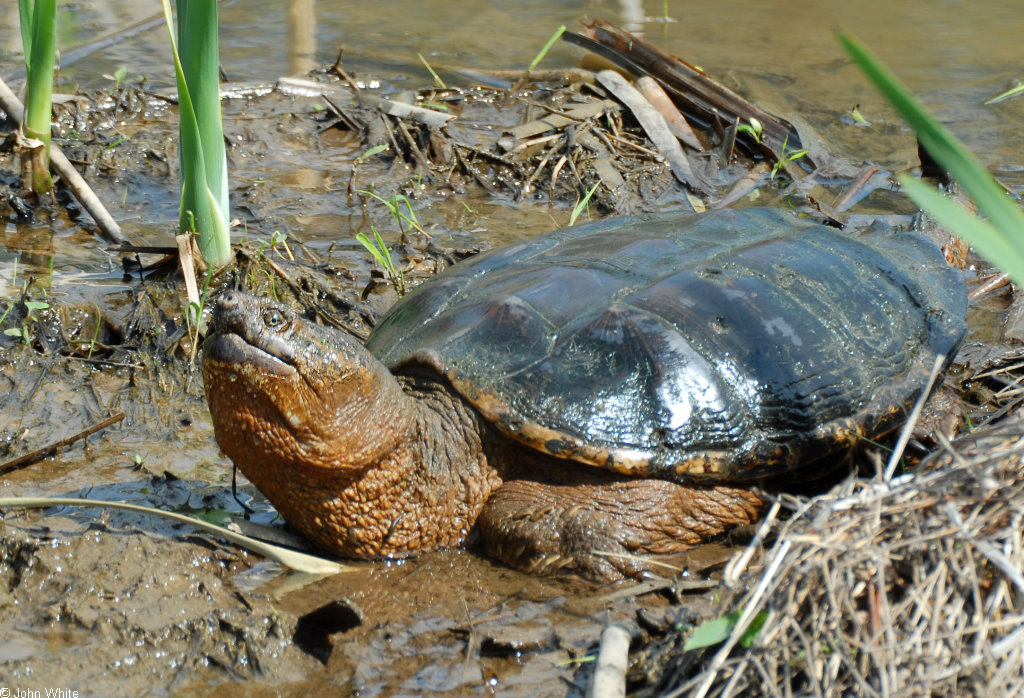
Ontario boasts eight turtle species, which is more than any other province in Canada. But that’s in danger of changing; of the eight species, seven are at risk. What humans have done through contributing to habitat loss, hunting, and poaching, is target adult turtles. That increased adult mortality is actually what’s driving the population down. This, combined with the fact that few young turtles live to adulthood; only seven of every 10,000 snapping turtle eggs; means that species are being driven toward endangerment. You’re most likely to spot turtles in marshy areas where there is native aquatic plant life. But during nesting season, which runs from late May to early July, you’ll also spot them crossing roads and in sandy or gravel areas. Spring is important time to watch for turtles. If you can save one turtle by moving it off the road, that makes a big difference to the overall conservation of the species. Take a picture of the turtle with your phone and upload it to Ontario Nature’s Reptiles and Amphibians Atlas, which features the most up-to-date maps of turtle species across Ontario.
If you see an injured turtle don't be afraid to contact https://ontarioturtle.ca/ourmission/drop-off/
they will be able to help save and rehabilitate the turtle.
1. Blanding’s Turtle
- Unlike snapping turtles, which have yellow spots, look for a bright yellow chin and throat.
- If you spot a turtle eating on land, it might be a Blanding; most aquatic turtles feed exclusively in the water.
- They’re also likely to be seen on the move; Blanding’s make the largest overland movement of any Ontario turtle to move from their summer nesting spots to overwintering habitat.
Fun fact: These turtles can live to be 75.
2. Eastern Musk Turtle
- With an upper shell that is brown with black flecking and a yellowish lower shell, these guys are easily confused with painted turtles, snapping turtles, and Blanding’s turtles. However, this small turtle only reaches a maximum length of 13 cm.
- Keep an eye out for a light stripe above and below the eye on each side of the head in adult turtles.
- Generally nocturnal creatures, Eastern musk turtles also rarely swim.
Fun fact: This turtle is named for the odour it emits when it’s threatened, which; you guessed it; is strong and musky. It’s also called “stinkpot.”
3. Midland Painted Turtle & Western Painted Turtle
- Painted turtles feature distinctive black shells with dark red or orange markings. No other species native to Ontario claims these colours.
- Easily spotted on the move, painted turtles will move over large areas overland in search of nesting sites.
- These are the only non-threatened turtle species in Ontario, but they are still susceptible to the threats that face other turtles.
Fun fact: With a natural “antifreeze” that prevents them from freezing, these turtles can survive temperatures as low as -9º C.
4. Northern Map Turtle
- Named for its markings, this turtle has contour lines on its upper shell that look like a topographical map.
- They also feature a yellow spot behind their eyes. Don’t confuse them with snapping turtles though; snapping turtles are larger and lack the distinctive shell markings of the map turtle.
Fun fact: One of the largest threats to this turtle’s pollution is water pollution. It can cause mass die-offs of mollusks, one of their primary food sources.
5. Snapping Turtle
- The most prehistoric-looking of all of Ontario’s native species, the snapping turtle has triangular spikes along its tail.
- Most likely to be confused with musk turtles, snapping turtles are significantly larger and grow up to 47 cm long.
- Not the strongest of swimmers, these aquatic turtles are usually observed walking on the bottom of small ponds and rivers or crossing roads.
Fun fact: Most Ontario turtles only lay somewhere between three and 15 eggs. The snapping turtle lays around 50.
6. Spiny Softshell
- As the name implies, the softshell turtle has a soft, leathery shell.
- A long snout makes this peculiar-looking creature unmistakable from its counterparts.
Fun fact: With the ability to get nearly half the oxygen they require by breathing through their skin in the water, they’re able to stay submerged for up to five hours.
7. Spotted Turtle
- The spotted turtle features orange-yellow markings on its limbs, neck, and legs. However, it’s most clearly identifiable from the yellow spots marking its shell.
- While males have dark eyes and a dark chin, females of this species have orange eyes and a yellow chin.
Fun fact: Unlike most other turtles, spotted turtles spend the summer or dry season in a state of inactivity to avoid hot dry weather.
8. Wood Turtle
- With a highly sculpted upper shell, Ontario Nature calls this species “one of Ontario’s most attractive turtles.”
- The neck, chin and and front legs are a vivid orange-yellow colour.
- Like their name implies, these turtles are likely to be found in woodlands or floodplains during the summer months.
Fun fact: They’re considered extremely intelligent and have been documented using creative methods to get their food, including stamping their feet to cause earthworms to come to the surface.
References:
Sabrina Merks
Tuesday, May 29, 2018
Trailblazer Tuesdays
🌳Trailblazer Tuesdays🌳
This week the outlook opens and we cant be more excited! The John. E Pearce park was named after the John. E Pearce who generously donated the land in the 1950s and this property had been held by his family since it was first settled in 1809. The park was classified as a natural environmental class farm but has been re-classified as a nature reserve to more appropriately recognize the heritage aspects and earth/life science characteristic found here. The park incorporates a sample of eroding Lake Erie Bluffs in association with the deciduous forest. A small picnic area sitting atop 30 m bluffs on the lakeside provides visitors with a beautiful vista looking out over Lake Erie, this opens June 1st!
And as erosion continues, the fence will be moved inland when needed.
Plant diversity is very high in the park. 405 species of plants were found in the park. 15 of which are considered rare in Ontario and 3 of which have not been recorded elsewhere in Elgin County. The most common tree found in the park is the sugar maple. Walnut, ash, hickory, ironwood and beech are also found in the park as well. Covering the forest floor is a lush matt of wild flowers. Trilliums, hepaticas, touch-me-nots, violets, jack-in-the-pulpits, and blood roots can be seen blooming in their respective seasons. Bird migrations can be seen from the lookout as well, especially in the fall with the hawk migration.
Don't forget that the museum is park of the provincial park too, walk the Spicer trail and the Mary Storey Wetlands trail. How can you be a trailblazer of conservation and help to foster an appreciation of nature in your community?
Sabrina Merks
Tuesday, May 15, 2018
Trailblazer Tuesdays
🌿 Trailblazer Tuesdays 🌿
In Southern Ontario there are so many deer that there are collisions between cars and deer almost daily.We get many deer here at the park! Just this week I saw two beautiful deer across the street from me. The reason is the female deer often leaves her fawn unattended for hours at a time while she searches for food. And in Southwestern Ontario, and across the province, the White Tailed Deer is the most common deer found. This graceful white-tailed deer Odocoileus virginianus is well known to most North Americans and is easily recognized. Hunters and non-hunters alike recognize the animal by its habit of flipping its tail over its back when it is startled, revealing the white underside and white buttocks.
This "flag" of the white-tailed deer is often glimpsed as the high spirited animal dashes away from people. The tail has a broad base and is almost a foot long. When lowered, it is brown with a white fringe. Male Deer can grow to a height of 1 meter at the shoulder and can weigh around 110 kg when full grown and occasionally weigh up to 200 kg in the northern part of their range. In the summer time there is abundant food which makes almost any forested or bushy area suitable for deer. In the winter and the snow deepens, the deer concentrate in "deer yards," or areas that provide food and shelter from storms and deep snow.
Human activities, such as the cutting and burning of blocks of forests, the seeding of agricultural crops, the winter feeding of cattle, the reduction of competitors such as mule deer, elk, moose, and the restriction on hunting of white-tails have helped this deer to extend its range northward and westward. In addition the long-term easing of the severity of winters may have been an important factor. Whatever the exact combination of causes, the range of the white-tailed deer extended considerably during the late 19th and the first half of the 20th centuries. Now the deer is found throughout the majority of northern Ontario, but also through Manitoba, Saskatchewan and parts of Alberta and British Columbia.
If you are wanting to spot a White Tailed Deer the best times of the day to take a picture are the first two hours after day break, and the last two hours before sunset. Grab your camera, head down to John. E Pearce park, take a walk down Spicer Trail, or Mary Storey wetlands trail and see if you can take a picture of these beautiful deer.
How can you be a trailblazer of conservation and help to foster an appreciation of nature in your community?
Sabrina Merks
Wednesday, November 29, 2017
Wetlands Storey Trail Grand Opening Speech
We had a great turn out on November 18, 2017 for the grand opening of the wetlands in John E. Pearce Provincial Park. Even though it rained, 84 people turned out to walk the trail, enjoy activities and free food. Below are some pictures from the day and Angela Bobier's speech. Videos will be posted to YouTube in the coming weeks as well.
Good afternoon everyone.
I want to thank all of you for attending the Grand Opening of the
Wetlands Restoration and the 60th Anniversary of John E. Pearce
Provincial Park. I’m Angela Bobier,
Cultural Manager here at Backus-Page House Museum. Before I introduce our special guests who
will each have a few words for you, I want to extend a thank you to the board of
directors and volunteers of Tyrconnell Heritage Society for their contributions
all year long, but especially with this Wetlands Project. I also want to mention our summer staff
Benjamin Buchanan and Sabrina Merks, Delany Leitch for her work this summer, fall
and today, plus special recognition to our Education Coordinator who planned
this opening, Kaitlin Crow. Please give
them all a round of applause for their dedication and work.
There is more recognition for me to give but I’m going to
do that when I introduce each of our dignitaries. First I’d like to welcome and introduce our
Member of Parliament for Elgin -Middlesex-London, Karen Vecchio
KAREN VECCHIO
Karen, thank you for being here. We had big plans for Canada150 and were
thrown a curve ball when we found out that historic projects weren’t eligible
for funding. When the idea of turning
the farm fields into a wetlands was mentioned, I immediately applied to the
Canada 150 fund under the environment, youth and education components. I did haggle and was allowed 4 trail signs
that were historic in nature. Last
November I got the call that we had been approved for $50000. So we have to thank Canadian Heritage for
their contribution.
Since we are in a provincial park I’d like to have our
Member of Provincial Parliament, Jeff Yurek say a few words.
JEFF YUREK
Jeff thank you for being here. Many groups and organizations came forward to
assist with funding and in kind services.
I’d like to recognize Forests Ontario, Rural Lambton Stewardship
Network; Littlejohn Farms who up until last year were still farming part of
what is now the wetlands; Kettle Creek Conservation Authority and the Boy
Scouts for planting all those trees, Elgin Clean Water Program and the Elgin
Stewardship Council. Our most important
partner not only with the Wetlands Restoration, but also because we are located
inside the park, is Ontario Parks. I
want to mention Rhonda Card who is our Park Superintendent who couldn’t be here
today. She did so much coordinating of
schedules and people. She’s asked her
Assistant Park Superintendent Trevor to be here today to say a few words.
TREVOR DOUCET
Thank you for being here Trevor and for all the work I
know you did as well. Another exciting
phone call was from TD Friends of The Environment Foundation. They had a special Canada 150 fund and we
were lucky enough to be chosen to receive $30000 towards the Trail Development,
Viewing Platform, Tall Grass Prairie seed and Habitats. This afternoon you can build bird nesting
boxes that will go in the ponds thank you to their funding. They have sent a representative today as
well.
TIM EDGAR
Thank you so much Tim for attending today. Kaitlin was great at getting some sponsors
for todays event so I want to make sure you know that some of the food was
donated by Schinkels Gourmet Meets in Chatham and Food4Less. We have got to work with some fantastic
contractors too including Fontasy Signs; MacLaughlin Excavating &
Contracting; Hermes Translation Services; Darrel Dick Excavating; DJW Mini
Backhoe Service and more.
Last but not least for partners was the Municipality of
Dutton Dunwich and we have our Mayor Cameron McWilliam here with us.
CAMERON MCWILLIAM
There are still a few upcoming items to put in place
before this project is complete. The
viewing platform is still to be finished and one last trail sign will be posted
on that. Teacher and parent educational
resources will be made available on our website and field trips for children of
all ages will be happening in the wetlands.
We will watch the growth of the trees, tall grass prairie, pollinator
habitats, and add snake hibernariums and nesting boxes. It’ll be wonderful to see the changes with
every season so please continue to visit frequently. Lastly, an English and French audio guide
will be recorded and uploaded to the museum website so you can download it and
listen to a tour while you walk the new trail.
Speaking of the trail, there are interpretive signs
throughout discussing the environment and wetlands, but you know I couldn’t
leave out the history of the land. I
really did negotiate with Canadian Heritage to let me have 4 history related
signs. There is a sign for the Neutral
Nation, the indigenous people who lived here about the same time as the
Southwold Earthworks. One sign is about
Colonel Thomas Talbot because of course this is the heart of the Talbot
Settlement. One is on 20th
Century Farming and gives a nod to Andrew & Mary Jane Backus, their son
Storey Backus, the Kennedy’s, Morley and Grace Page who all lived in this house
and John E. Pearce gets a mention.
I was asked a few months ago if there was a name we
should give the trail. I immediately
said the most deserving person is Mary Patterson Storey. Mary arrived with the other members of the
founding families in 1809 and got this 200 acre land grant from Colonel
Talbot. She donated part of her land for
St. Peter’s Anglican Church and the cemetery.
She left the rest to her grandson Andrew Backus who built what you now
know as the Backus-Page House Museum.
Back in 1809, as a 51 year old widow born in Ireland, how could Mary
have known that over 200 years later her land would include not only the church
and cemetery, but the community’s museum, a Provincial Park, 2 private homes,
and a trail named in her honour. She is
the matriarch of this settlement and I have always felt she has rarely received
the credit she is due. So today we dedicate
this trail through the new wetlands to Mary Storey. I hope she approves.
So let’s get this party started! In the house you can tour through (we have a
brand new artefact in the parlour that arrived yesterday), there are activities
for the children and children at heart inside too. The second floor of the barn is open for
tours and you can build a nesting box for the ponds under the tent. The hot dogs and cold drinks plus the
bathrooms are just outside the door. We
are going to head outside for a ribbon cutting and photos which you are welcome
to come out if you brought an umbrella. After
that we will come back and cut the cake.
Again thank you all for being here.
Congratulations to everyone who participated in this Wetlands
Restoration Project we did an amazing job.
Happy 150th to both Ontario and Canada and Happy 60th
Anniversary to John E. Pearce Provincial Park.
Saturday, July 1, 2017
Citizen Scientists Wanted - Must Like Snakes
I can't believe I am writing a post about snakes (this is Angela writing by the way). Snakes freak me out, but there are some species in John E. Pearce Provincial Park that need researching. We are partnering with the park to restore the wetlands and there are plans to construct snake hibernaculum (the winter den for hibernation). The task right now is to get YOU, our Citizen Scientists, to report to us at the museum, where you see snakes inside the park boundary.
We'll need to know when you saw the snake (date and time), where specifically in the park, and a picture would be very helpful to identify the species you see. You can email the pictures and details to info@backuspagehouse.ca with the Subject "Snake Sighting!" and I'll be most happy to pass it along to the Ministry of Natural Resources staff.
There is talk of also holding a field day to teach volunteers and citizen scientists more about the snakes and their hibernaculum so we'll keep you up to date on that front. For now just send in those pictures and sighting details to info@backuspagehouse.ca
I've included a map of the park to assist you with reporting the location. You can give me the alpha-numeric area and any details you recall about the spot. The more information we have the better.
Here's a YouTube video of our snake hibernacula expert Gregor. https://youtu.be/LotuLkvkqTc
Thank you in advance for participating.
We'll need to know when you saw the snake (date and time), where specifically in the park, and a picture would be very helpful to identify the species you see. You can email the pictures and details to info@backuspagehouse.ca with the Subject "Snake Sighting!" and I'll be most happy to pass it along to the Ministry of Natural Resources staff.
There is talk of also holding a field day to teach volunteers and citizen scientists more about the snakes and their hibernaculum so we'll keep you up to date on that front. For now just send in those pictures and sighting details to info@backuspagehouse.ca
I've included a map of the park to assist you with reporting the location. You can give me the alpha-numeric area and any details you recall about the spot. The more information we have the better.
Snake Sighting Grid Map of John E. Pearce Provincial Park
Here's a YouTube video of our snake hibernacula expert Gregor. https://youtu.be/LotuLkvkqTc
Thank you in advance for participating.
Saturday, June 3, 2017
Wetlands Restoration at John E. Pearce Provincial Park Update
You may have been wondering what is going on at the end of Currie Road inside John E. Pearce Provincial Park these past few months. The Ministry of Natural Resources, Tyrconnell Heritage Society and numerous partners, including funding from the Government of Canada, TD Friends of the Environment Fund and more, are restoring the land.. There are 3 wetland cells which turned out to be much larger than initially planned due to all the rain. A tall grass prairie and pollinator habitat, more trees and a 1.4 km trail with interpretive signage and accessible viewing platform are being added to celebrate Canada150, Ontario150 and the 60th anniversary of the park itself. Stayed tuned for more updates as we continue this project. Pictures by Robert Ellis.
Subscribe to:
Posts (Atom)