Showing posts with label great lakes. Show all posts

Friday, August 31, 2018

Fun Fact Friday #9 - Little Ireland 🍀

Colonel T. Talbot
      Did you know that the first four settlers in the Dunwich township were all related?

      On July 14, 1809, a raft-like boat sailed along the shore of Lake Erie. Packed with men, women, and children and all of their belongings, scared and excited to see what this new land had to offer. They finally landed and were met by a short, stocky man named Colonel Thomas Talbot. He was happy to greet them because they were the kind of settlers he wanted, Irish.

      There were four individual families aboard that craft, Storey, Backus, Patterson, and Pearce. Mary Storey was the eldest. A widow at 51 accompanied by her son, Walter, and daughters, Anne and Sarah. Anne ended up marrying Stephen Backus (another settler) and they bared eleven children. Leslie Patterson immigrated at the same time as his sister, Mary Storey, and met and married Lydia Backus. Mary and Leslie's other sister, Frances Patterson, married John Pearce in Pennsylvania, but then made their way to the Talbot Settlement along with the others.

      There is a barn quilt hung at the Backus-Page House Museum in honour of the four settling families. It is a green and yellow Irish star that symbolizes the families' ancestry. The star also emphasizes the progress that the settlers had made. Finally, the four pointed star represents the four families.

Visit Stephen Backus and Anne Storey's grandchildren's home at:
29424 Lakeview Line, Wallacetown, ON
(519) 762-3072
A map of Elgin County in 1877.
Second from the left is the area (Dunwich)
 the families settled on.

Friday, August 10, 2018

Fun Fact Fridays #6 - Don't Throw the Baby Out with the Bath Water! 🛁

      Did you know that in the 19th century families would bathe from oldest to youngest and all use the same bath water? Usually in the summer, the Backus family usually bathed in the lake across the street, but it was way too cold to do that in the winter. Instead, they had either a bathtub or just a tub of water that they would all share. Starting with Andrew (the oldest), they would bathe one by one with the bath water getting dirtier and dirtier with every bath. Andrew and Mary Jane had 12 children altogether (only 6 lived to adulthood), so you can imagine how dirty that water would be when the baby goes. Hence, "don't throw the baby out with the bath water". Then again, it would really help the immune system. 

      Come see the type of bathtub the Backus' would have had in person at:
29424 Lakeview Line, Wallacetown, ON
(519) 762-3072


Tuesday, July 3, 2018

Trailblazer Tuesdays


Trailblazer Tuesdays 

Lake Erie, the shallowest lake of the five Great Lakes, is home to an abundant supply of fish. All year, there are some species to be found in this body of water that forms most of South Western Ontario. Learn a little about some of the most prevalent Lake Erie fish. Fishing on Lake Erie is a popular pastime throughout the year. Hardy souls even ice-fish on the lake during the middle of winter. All those fishing on Lake Erie is required to have a fishing license. BUT right now is FAMILY fishing week, until July 8th, anyone can fish, no need for a license. 


The largemouth bass, also called a black bass, grows to be around 12" to 15" long. This Ontario native is found in virtually all over the Province, especially in Lake Erie. The largemouth bass is typically around 1 to 3 lbs.
Bluegill, also known as Bream, inhabit almost all lake, rivers, and streams in Ohio. These fish are typically around 6"-10" long, and although colors vary, all Bluegill have a black spot on their ear flap.


Lake Erie Catfish, also known as Channel Catfish and Spotted Catfish, is an Ohio native. This tolerant species thrive in all kinds of conditions but prefers deep, still waters. Lake Erie Catfish average 12" to 14" in length and can reach 10 lbs.


Black Crappie, native to western Lake Erie as well as other Ohio streams and rivers, prefer clear water with little vegetation. They are ​identifiable by the seven to eight spines on their dorsal fin.


The Northern Pike is a long, slender fish, native to Ohio. It is found primarily in the Lake Erie waters surrounding Sandusky and Maumee Bays. These fish prefer marshes and bays and average around 20" to 32" in length and around 2 to 10 lbs.

Walleye, a medium-sized freshwater fish, is plentiful in the Great Lakes and the rivers and streams that flow from and into the Lakes. In Ohio, the fish is a springtime fishing favorite, particularly in the Maumee River near Toledo and in the Canadian waters of Lake Erie. Also called a Pickerel, this fish averages 14" to 22" in length and ​weighs an average of 2 to 4 lbs.

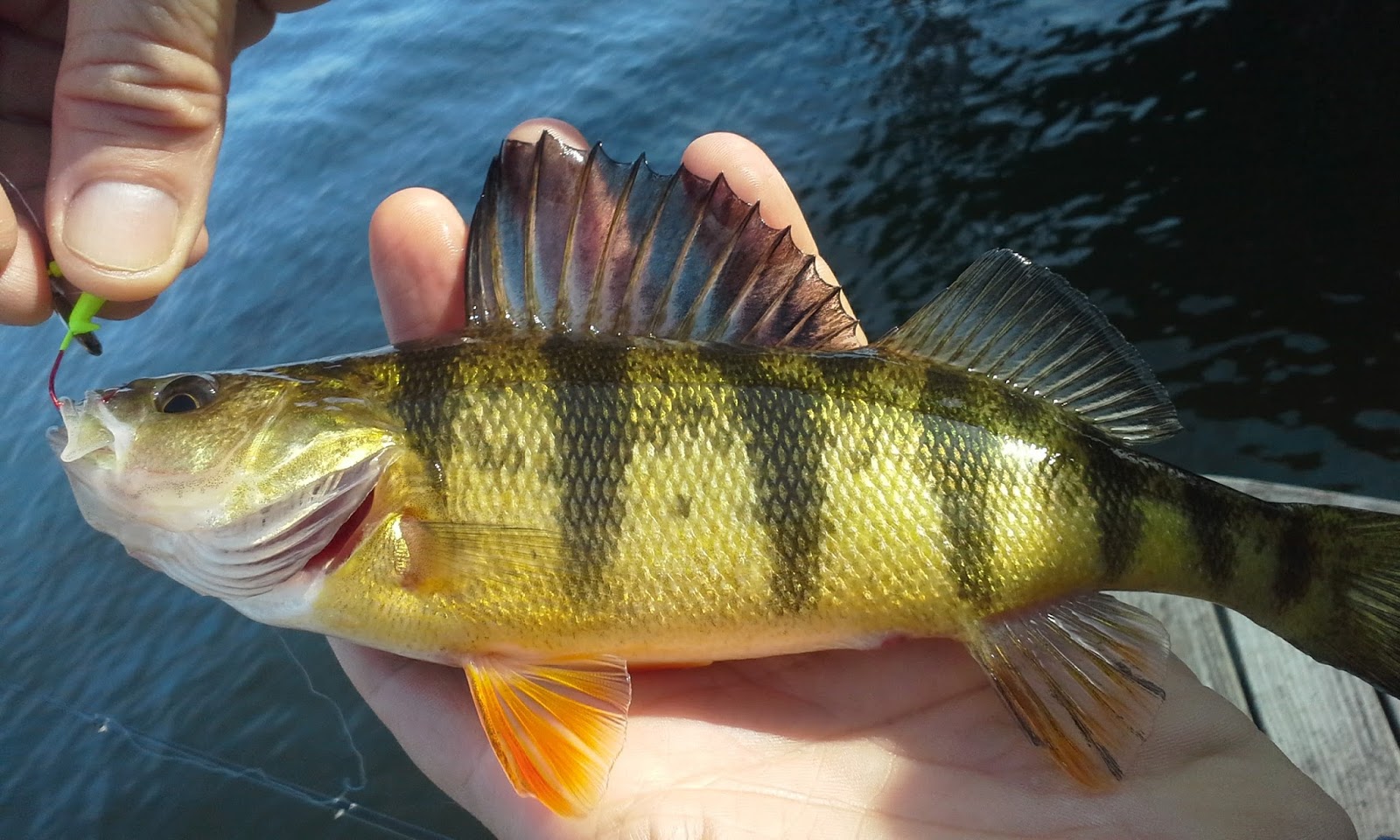
The yellow perch has a yellow to brass-colored body and distinct pattern, consisting of five to nine olive-green, vertical bars, triangular in shape, on each side. Its fins are lighter in coloration, with an orange hue on the marginsIn many populations, yellow perch often live 9 to 10 years, with adults generally ranging from 4 to 10 inches (10–25 cm) in length.


Thanks for reading
Sabrina Merks
Refrences
https://www.utoledo.edu/nsm/lec/pdfs/Lake%20Erie%20species%20list-1.pdf
https://www.fisherie.com/Lake-Erie-Fishing

Tuesday, June 12, 2018

Trailblazer Tuesdays


🌱Trailblazer Tuesdays🌱 


             Lake Erie is the warmest of all of the Great Lakes, but it also freezes over more than the other lakes. It is the fourth largest when measured in surface area, with round 25,700 square kilometers and the smallest by water volume, with 484 cubic km. Lake Erie touches four U.S. states; New York, Pennsylvania, Ohio and Michigan. As the southernmost of the Great Lakes, the majority of Lake Erie's water flows in through the Detroit River from the upper lakes ; Lake Superior, Lake Michigan and Lake Huron ; as well as tributaries such as the St. Clair River and Lake St. Clair. Its main outlet is Niagara falls The Niagara River, the source of the falls, runs 58 kilometers and connects Lake Erie and Lake Ontario. Lake Erie has a tail-like shape, which is reflected in its name, which is derived from erielhonan, the Iroquoian word for "long tail."  Due to its southernmost position, Lake Erie is the warmest of all of the Great Lakes. While temperatures have reached as high as 85 F (29 C), water temperatures are generally in the low 70s F (21 C to 24 C) during the summer months, making Lake Erie a popular recreational area. 
            During the winter, water temperatures reach freezing, and the lake freezes over more than the other Great Lakes because of its shallowness. Its average depth is 19 m and its maximum depth is 64 m.Water levels are 7.6 to 9.1 m in the lake's shallowest area, making it possible for strong winds to kick up fairly powerful waves.Lake-effect snow has a huge impact on the surrounding communities.Like all of the Great Lakes, Lake Erie is basically a divot formed from a moving glacier and is relatively young; less than 4,000 years old in its current configuration.Several native peoples lived on lake's shores, including the Erie tribe and the Iroquois. Lake Erie was the last of the Great Lakes to be explored by Europeans. French explorer Louis Joliet "discovered" the lake in 1669. The lake also played a pivotal role in the War of 1812.
           By the 1960s, Lake Erie had become sort of a "poster child" for water pollution. Pollutants from factories, waste from city sewers, and fertilizer and pesticides from farms made their way to the lake. As a result, levels of phosphorus and nitrogen increased, which led to algae blooms. The toxic algae caused "dead zones" by depleting the oxygen, and dead fish littered the shoreline. And in 1969, the Cuyahoga River, which flows through Cleveland, Ohio, caught fire. The federal government responded to this situation by passing the Clean Water Act in 1972. The law tightened regulations on industrial dumping. While the water quality of Lake Erie has much improved, the lake continues to be prone to algae blooms and still has dead zones. 
Lake Erie also has its own legendary lake monster , Bessie, which is mostly likely a huge sturgeon.

References 
www.livescience.com
Sabrina Merks