Showing posts with label home front. Show all posts

Wednesday, May 3, 2017

World War Wednesdays: The Canadian Club of London During Wartime


     Yes, you read correctly, WWW is still up and running! My apologies for the missing post last week. I'm thrilled to be able to say that after a bit of a stressful month, I've wrapped up my undergraduate degree at the University of Ottawa and am looking forward to grad school at Western in the fall. Just before I came back home to Elgin County, I had the pleasure of attending a luncheon with the Canadian Club of Ottawa in the Chateau Laurier ballroom as a representative of the University and the Daughters of the Vote program. By coincidence, I was researching some potential topics for this week and came across some resources for Canadian Clubs closer to home and their wartime transformations. I find the Club very interesting and am always looking for local connections, and I hope you will enjoy both of those elements.

     To begin, here's a description of the club from the London edition's website:
The Canadian Club of London has a long and distinguished history of uninterrupted service in the community since its founding July 31, 1906.  During the past 110 years, the club has been host to more than 1000 Canadian and international leaders who have shared their views with enthusiastic London audiences, making the Canadian Club one of the longest-standing organizations in the city. Each month, from September to June, the club brings prominent Canadians to the city to speak on topical issues of national and international interest in the arts, history, business, finance, education, law and politics.
Meetings are generally held over lunch  and are hosted at the Double Tree by Hilton. Members and guests take delight in spirited engagement with speakers and intelligent discussion. Our events provide outstanding opportunities for networking and engaging with prominent members of the business community in London.
Club membership is open to anyone. Members receive a monthly newsletter giving advanced details of upcoming speakers along with discounted rates on event tickets.
     According to Elgin County Archives, St. Thomas also had a Canadian Club at one time, which featured patriotic programming during the First World War, but I was unable to locate those records in the database. The Elgin County Museum has the Club's minutebook, and its description in the inventory holdings reads that it "raised funds to sponsor the war effort and sponsored lectures on war topics." The entry also mentions that the Club was founded with the purpose of fostering patriotism for the war, so perhaps St. Thomas established its own model of the London version for that specific purpose. This is one of the unfortunate parts of being a historian with questions that aren't always easily answered! Sometimes we just have to go where the material is so we're headed to the big city to look at how the London Club's meetings were affected by both World Wars.
     In the "Our History" section of the Canadian Club of London's website, it appears as though the club did not hold meetings between 1914 and 1918, during the First World War, or there are no records for that period. 1913 saw a "joint meeting with the Women’s Canadian Club" with "Col. Charles R. McCullogh of Hamilton, the acknowledged founder of the Canadian Club movement as the speaker." In May 1919, the speaker was Dr. William Roche, one of Western’s first two graduates and the newly appointed Chancellor for the university.
     During the Second World War, however, the meetings closely reflected the geopolitical conditions at the time. "There were regular speakers from the military as well as representatives of Poland and other countries overrun by Germany and Russia expressing hope their countries would be re-established after the war. A speaker from China in 1942 said his country could win over the Japanese as long as the allies didn’t introduce some kind of “Munich” agreement that would create a withdrawal of support." 
     What is significant about this club is that it brings together a city's leading citizens to discuss important issues and ideas of the day. With such a long history, it is fascinating to see how the speakers and their topics change over time and gain an idea of what the popular opinions were. When the wartime context becomes a factor, those gatherings become even more significant and their messages reflect important concerns and ideas. What historians can take away from such sources as meeting minutes and summaries from clubs like this is what types of speakers and themes were being included in the programming in order to understand what the popular opinions of upper class urban residents would have been at the time. 
     Information comes from Elgin County Archives and the Canadian Club of London website. Stay tuned in the next few weeks for some exciting local history posts, it's that time of year when I come home and things get local!
     Thanks for reading,
Delany (@DLeitchHistory on Twitter)

Wednesday, March 29, 2017

World War Wednesdays: Hayloft Patriotism and the National Barn Dance


     Sometimes as a historian you find yourself researching topics that are both very random and very specific, and that don’t always relate to your actual area of study. This is otherwise known as term paper season, which is upon us right now here at UOttawa! This will be my last one as an undergrad so I’m trying to make the most of it, expand my horizons, and even take advantage of some new digital opportunities to present research rather than the traditional twenty-page paper. My research for my course on the history of American TV and radio turned up a really interesting chapter that I wanted to share with you this week!

            The National Barn Dance radio program got its start through a station called WLS in Chicago, which was famous for its agricultural news, service to Midwest farmers, and broad range of entertainment suited to their tastes. Their Saturday night programming ran from 7PM until midnight and included the Barn Dance, which was the crème de la crème of their shows and began airing in 1924. The program featured live performances which were recorded over the radio, much the same as the similar Grand Ole Opry. At the time of the outbreak of WWII in 1939, it was heard on sixty-seven NBC stations across America and had a cast of over a hundred performers, who were referred to as the Hayloft Gang.
Some of the Hayloft Gang in 1934, including Gene Autry (left with the ten gallon hat), Radio Timeline
            Immediately following the attack on Pearl Harbor on December 7, 1941, WLS officials began mobilizing the station’s lineup of Barn Dance talent in support of the war effort. Management allotted the Chicago Defense Committee five hundred seats in the Chicago theatre which had been home to the show since 1932, for the use of soldiers and sailors wishing to attend December 20 and 27 performances.

            Throughout the war years, the NBC segment of the National Barn Dance often featured some patriotic theme. The January 24, 1942 program, for example, had the Hayloft Gang present a musical salute to the nations allied with the United States. The theme for the May 16, 1942 broadcast was a “Red, White, and Blue” party in honour of “I Am an American Day.” The December 5, 1942 program was devoted to recognition of the first anniversary of the Japanese attack on Pearl Harbor, and all the musical numbers were war-related. These included a square dance number called “Soldier’s Joy” and a banjo rendition of “Stars and Stripes Forever.”


            National Barn Dance shows also became staple attractions of the United Service Organizations for National Defense, Inc. (known as the USO), which was established in 1941 for the purpose of providing social, welfare, and recreational services for members of the U.S. Armed Forces and their families. National Barn Dance entertainers formed various branches which travelled separately across America to entertain the troops, and some even performed in Europe. Their impressive record of performances helped to bolster the morale of thousands of appreciative fans on behalf of the USO, and also helped to popularize country music in general.

            WWII was financed partly through the sale of war bonds and war stamps, and between September 1942 and the end of the war in 1945, the United States conducted seven nationwide war bond drives. Along with numerous other organizations, celebrities, and businesses, the National Barn Dance did its part to participate in those drives. For example, admission to some shows would require the purchase of a war bond. Individual performers and small groups of Barn Dance acts would also sell bonds at their personal appearances. Then, in August 1942, WLS announced that it would begin selling war bonds over the air, so that “You farm folks won’t have to take time away from the task at hand for a trip to the local War Bond headquarters to purchase your share.” All listeners had to do was send their money by mail to WLS.


            The National Barn Dance also responded to the call for the collection of scrap materials to be used in the war effort. Across the Midwest, WLS listeners exchanged scrap metal, rubber, and paper for tickets to see their favourite Barn Dance performances. In Normal, Illinois, for example, the price of admission to a Barn Dance show in the summer of 1942 was 100 pounds or more of scrap metal or 50 pounds or more of rubber, and competitions were held to encourage more salvaging. By August 1944, the National Barn Dance had aided in the collection of over three million pounds of scrap metal, rubber, and wastepaper, and WLS became the first, and at that time, only radio station to receive a U.S. War Production Board Citation for salvage collection.

            Finally, the National Barn Dance also played an important role in what was probably the war’s most popular home front initiative: the planting of Victory Gardens. In 1943, some forty-five WLS employees, including a number of Barn Dance performers, started operating a Victory Garden on a five-acre farm in suburban Chicago. Since most of the performers had grown up on farms, they excelled at the initiative both in reality and in its advertisement onstage. The theme of the April 15, 1944 show was “Victory Gardens,” and the cast, carrying rakes, hoes, shovels, and other tools, assembled onstage wearing overalls, straw hats, and oversized sunbonnets. The Hayloft Gang sang songs such as “Get out and Dig, Dig, Dig,” and “Plant a Little Garden in Your Own Backyard,” and the emcee insisted that Victory Gardening was “a serious business.”
This cover of the 1945 WLS Family Album depicts a postwar scene, Radio Timeline

            By mid-1945, with the end of the war in sight, the Barn Dance programming started to turn toward postwar messages and issues. The program and its cast had performed an impressive range of initiatives in support of the war effort while maintaining their tradition of popular entertainment. The program continued for another fifteen years after the war’s end before ending its thirty-six year run in April 1960.

            Thanks so much for bearing with me on yet another radio/country music theme! All information comes from “Hayloft Patriotism: The National Barn Dance During World War II” by Wayne W. Daniel, in Country Music Goes to War ed. Charles K. Wolfe and James E. Akenson.
                        Thanks for reading,

Delany (@DLeitchHistory on Twitter)

Wednesday, January 4, 2017

World War Wednesdays: The Maple Leaf Belgium Scrapbook, WWII

WorthPoint.com
     I hope everyone is having a smooth transition back to reality after the holiday season! Don't mean to brag, but I am still enjoying some R&R back at home before my final (!!!) semester of undergrad starts on January 9. While I'm still here, I wanted to share with you a fascinating item I received this week which is a great addition both to my personal collection and this blog. It is a Second World War souvenir scrapbook called "The Maple Leaf," which the cover states was "printed in Belgium at cost price to forces overseas." Essentially, it was a Canadian Army newspaper which kept soldiers informed on what was happening around the world and back at home while they were serving. My copy was given to me by my grandpa, who said that it came in a collection of papers from his parents' house (his father served in WWII). It was quite exciting to have a personal connection to the item since I had thought that his war memorabilia had already been dispersed among distant cousins, and I am always looking for more details on his service (like many other professions, historians can be researching any number of in-depth family histories for other people but have limited knowledge on their own). I've looked into the book a bit online and it appears to be quite rare, although the Toronto Public Library appears to have a copy should you be able to access it for yourself.

     A 2013 post on the online auction site WorthPoint.com includes what seems to be an excerpt from Barry D. Rowland's 1987 book, The Maple Leaf Forever: The Story of Canada's Foremost Armed Forces Newspaper, which gives a nice overview of the paper's history and is definitely being added to my reading list:

     “Captain MacFarlane, I want you to set up a newspaper for the Canadian Army,” said Lieutenant-Colonel R.S. (Dick) Malone, director of Public Relations for 1st Canadian Infantry Division during the Italian Campaign in November 1943.

     LCol Malone was reacting to the wishes of then Defence Minister, Colonel J.L. Ralston — a First World War veteran — who was deeply concerned for the welfare of the troops fighting overseas. But the impetus to deliver a daily Canadian Army newspaper to the frontlines in Italy was not a “top-down” decision; rather, it arose directly from the troops themselves who felt out-of-touch from home.
The Canadian soldier, also known as “Johnny Canuck”, expressed his angst through the chain of command. These concerns reached Minister Ralston’s ears as he arrived in Italy to speak to the troops after five months of hard fighting. Mr. Ralston knew well the fleeting nature of soldiers’ morale and pressed for ideas to shore-up fighting spirit. With Canadian soldiers complaining about their lack of knowledge on the home front, LCol Malone suggested the production of a daily newspaper, delivered directly to the frontlines with the soldiers’ rations.
The paper would be published in Italy with news from Canada and include stories and editorials prepared by military writers and war correspondents attached to the Canadian Division. The paper’s primary audience was the Canadian soldier. In return, the newspaper would not express opinions on domestic issues or report on internal military matters that might detract from morale.
And so Captain (later Major) J. Douglas MacFarlane, a former journalist with the Windsor Star and the Toronto Telegram, was appointed managing editor of the first Canadian Army newspaper. The newspaperman, who became a legendary figure in Canadian journalism following the war, was a natural fit for the job.
Mr. MacFarlane enlisted for wartime service with the Essex and Kent Scottish Regiment as a provisional reinforcement officer. He embarked on a long and winding military trail, stationed in Wolseley Barracks, the Officers’ Training Centre in Gordon Head, Vancouver Island, and attended the Advanced Infantry Training Centre at Camp Borden. Capt MacFarlane was then summoned to Ottawa and attached to Army Headquarters as a Public Relations Officer. He proceeded overseas in 1943, where he was eventually attached to General Harry Crerar’s headquarters when he got the call from his superior, LCol Malone – another giant in Canadian journalism after the war – informing him of the new publication.
What to call the paper?
LCol Malone suggested The Liberator, The True North, Northern Light, Johnny Canuck, The Beaver, and The Invader. Capt MacFarlane came up with The Maple Leaf, a reference to Canadian identity.
The first edition of The Maple Leaf rolled off the press in January 1944 in Naples, Italy and was a four-page tabloid. Sports, news, a daily editorial and Sergeant Bing Coughlin’s hapless “Herbie” cartoon character were the main features. The papers were flown to a postal distribution centre near the frontline and delivered to the troops by any and all means available: truck, jeep, lorry, aircraft and mule cart.
Curiously, a French-language edition of The Maple Leaf had been proposed but turned down by French-Canadian soldiers as they didn’t want their exploits restricted to French-copy only; they wished English speaking readers to know of their achievements.
At its height, The Maple Leaf printed 16,000 copies per day.


     My edition was printed in Belgium in 1945. Its introduction includes much of the same story as above concerning the paper's history, and also discusses how the "clippings" or articles in the scrapbook were selected from various departments in order to portray the paper's "general tone and spirit." In this regard, the editor-in-chief wrote, "If you don't like the selection write the editors and give them hell." Clearly, this was an informal and much-loved element in the Canadian soldiers' experience, and there is much to be learned and appreciated from these pages.

     Without further ado, I'll give you a little glimpse into the scrapbook (sorry about the poor lighting!):
This page shows how the paper was assembled like a scrapbook, with numerous photos seemingly pasted together on one page


Of course, it is not without its pinups! This page includes the beautiful Esther Williams

"Here's to You, Canucks!"

Even General Montgomery read The Maple Leaf!
     Overall, the scrapbook is a compilation of comics, poetry, news stories, photos, and articles all assembled for the intended enjoyment of Canadian soldiers far from home. It is obvious just by flipping through a few pages how much comfort and entertainment it would have brought them, and I can't help but think of how thrilled my great-grandfather would have been to have that small enjoyment. It's proven to be an amazing souvenir for both him and myself, and I hope you enjoyed this little overview.
     Thanks for reading,
Delany (@DLeitchHistory on Twitter)

Wednesday, December 7, 2016

World War Wednesdays: A Taste of 1918

   
      My sincere apologies for the lack of a post last week! Right after I told you all I'd never miss a week too. After some very frustrating technical difficulties we're back up and running and all is (hopefully) right with the world again. Let's get right down to business!
      I once had a professor who would make the whole class recipes from wartime and Depression-era cookbooks as an excuse for her to test out some risky historical concoctions. Since I can't do that for all of you, I thought it might be just as fun to take a look at some First World War recipes from the 1918 book Foods That Will Win the War and How to Cook Them. It was published in New York by C. Houston Goudiss, Food Expert and publisher of The Forecast Magazine, and Alberta, M. Goudiss, director of the School of Modern Cookery. Its foreword begins with:
     "Food will win the war, and the nation whose food resources are best conserved will be the victor. This is the truth that our government is trying to drive home to every man, woman and child in America. We have always been happy in the fact that ours was the richest nation in the world, possessing unlimited supplies of food, fuel, energy and ability; but rich as these resources are they will not meet the present food shortage unless every family and every individual enthusiastically co-operates in the national saving campaign as outlined by the United States Food Administration."

     Obviously, the work served a double duty as a patriotic source of encouragement for the American folks on the home front. For us today, it's a fascinating glimpse into what was being asked by everyday citizens in terms of lifestyle changes for the purpose of saving resources for the war effort. In general, Goudiss and Goudiss recommend one wheatless meal a day in every family, two meatless days per week, and each person to use one teaspoonful less of sugar each day. 

     Here's what they argued in terms of the economy of wheat:
     "Waste in your kitchen means starvation in some other kitchen across the sea. Our Allies are asking for 450,000,000 bushels of wheat, and we are told that even theirs will be a privation loaf. Crop shortage and unusual demand has left Canada and the United States, which are the largest sources of wheat, with but 300,000,000 bushels available for export. The deficit must be met by reducing consumption on this side of the Atlantic. This can be done by eliminating waste and by making use of cereals and flours other than wheat in bread-making." 

     Alternative ingredients for bread-making include cornmeal,  oatmeal, rye, barley, and mixed grains. Here are some of the bread recipes I thought might actually be fun and rewarding to try:

Oatmeal Muffins
1 1/3 cups flour
2 tablespoons molasses
1/2 teaspoon salt
2 tablespoons fat
3 teaspoons baking powder
1 egg, beaten
1/2 cup milk
1 cup cooked oatmeal
Sift dry ingredients. Add egg and milk. Add fat and cereal. Beat well. Bake in greased tins for 20 minutes.

War Bread
2 cups boiling water
2 tablespoons sugar
11/2 teaspoons salt
1/4 cup lukewarm water
2 tablespoons fat
6 cups rye flour
1 1/2 cups whole wheat flour
1 cake yeast
To the boiling water, add the sugar, fat and salt. When lukewarm, add the yeast which has been dissolved in the lukewarm water. Add the rye and whole wheat flour. Cover and let rise until twice its bulk, shape into loaves; let rise until double and bake about 40 minutes in a moderately hot oven.

Potato Pancakes
2 cups chopped potato
1/2 cup milk
1 egg
1 teaspoon salt
2 cups flour
5 teaspoons baking powder
2 cups of hot water
Boil potatoes in the skins for fifteen minutes. Pare and chop fine or put through food chopper. Mix potatoes, milk, eggs, and salt. Sift the flour and baking powder and stir into a smooth batter. Thin with hot water as necessary. Bake on a greased griddle.

     The book's section on meat saving is probably one of the most fascinating, as it includes some "scientific" opinions from the time that make the reduction of meat consumption sound fashionable and attractive:
     "Dr. Harvey W. Wiley has stated that the meat eating of the future will not be regarded as a necessity so much as it has been in the past, and that meat will be used more as a condimental substance. Europe has for years used meat for flavor rather than for nutriment. It would seem that the time has come for Americans to learn the use of meat for flavor and to utilize more skillfully the protein of other foods."

     This section also calls for an increased use of organs in meals, and outlines some methods for preparing such things as brains, heart, kidney, liver, tripe, and pigs' feet. Here are some of the meat-related recipes that wouldn't actually turn your stomach at the thought:

Actually, never mind. None of them sound appealing. Here's a meat alternative main dish that the authors recommend:

Macaroni with Cheese
Over 1 cup of cooked macaroni, pour this sauce:
2 tablespoons flour
2 tablespoons fat
1 cup milk
1/2 teaspoon salt
1/8 teaspoon pepper
1/2 cup grated American cheese
Melt fat, add dry ingredients. Add liquid slowly. Bring to boiling point. Add cheese. Stir until melted and then pour over macaroni.

Let's skip to the sugar-saving desserts to round off the meal:

Oatmeal and Peanut Pudding
2 cups cooked oatmeal
1 cup sliced apple
1 cup peanuts
1/2 cup raisins
1/3 cup molasses
1/2 teaspoon cinnamon
1/8 teaspoon salt
Mix and bake in a greased dish for 30 minutes. Serve hot or cold. This is a very nourishing dish.

Wartime Fruit Cake
1 cup honey or corn syrup
1 tablespoon fat
1 egg
2 cups flour
1 teaspoon cinnamon 
1 teaspoon cloves
1/8 teaspoon salt
1 cup chopped dates, figs, prunes, or raisins
3/4 teaspoon soda
2/3 cup milk
Cream fat, honey and egg. Sift dry ingredients. Add alternately with milk. Bake in loaf 45 minutes in moderate oven.

Soft Cinnamon Cookies
1 cup molasses
2 tablespoons fat
1/2 cup boiling water
1 cup flour
1 teaspoon soda
1/2 teaspoon ginger
2 tablespoons cinnamon 
1/8 teaspoon salt
1/2 teaspoon cloves
Mix molasses, fat, and boiling water. Sift dry ingredients. Add the liquid. Add enough more flour (about four cups) to make dough stiff enough to roll out. Cut and bake about 15 minutes in moderately hot oven.

Wartime Taffy
2 cups corn syrup 
1/2 teaspoon soda
1 teaspoon water
2 tablespoons vinegar
Boil the syrup for fifteen minutes, then add the soda. Cook until a little snaps brittle when dropped in cold water. Add the vinegar when this stage is reached and pour into oiled pans. When cool enough to handle, pull until white; make into inch-thick rolls and clip off into neat mouthfulls with oiled scissors, or chill and break into irregular pieces when cold.

"To provide adequate supplies for the continuing year is of absolutely vital importance to the conduct of the war, and without a very conscientious elimination of waste and very strict economy in our food consumption, we cannot hope to fulfill this primary duty."
-President Woodrow Wilson

     I hope this little glimpse into the First World War kitchens across America was an interesting and useful venture! Some of the desserts would make great Christmas gifts for that history buff on your list who continuously asks for outrageously-priced war relics and artifacts from niche market dealers in faraway countries. If you're interesting in sharing a little piece of 1918 this holiday or if you'd like to read more of this fascinating book, it is available as a free eBook through Project Gutenberg. If you do decide to whip up one of these recipes, please share a photo of the finished product! Happy cooking!
    Thanks for reading, 
Delany (@DLeitchHistory on Twitter)

Wednesday, August 24, 2016

World War Wednesdays: "In-Flu-Enza": The Spanish Flu Epidemic, 1918-19


     I had a little bird,
its name was Enza.
I opened the window,
and in-flu-enza
-Children's skipping rhyme, 1918

     Some fascinating and tragic elements of the First World War are the devastating events that occurred on the home front during that period. After four long years of unprecedented global devastation, the war ended in 1918 with a raging influenza epidemic which was partly spread by soldiers returning home. Ultimately, at least 20 million people around the world succumbed to the disease, including an estimated 50,000 Canadians. 

     Uniquely lethal in its tendency to attack young, healthy bodies, the Spanish Flu was spread through bodily fluids and moved quickly through the population. It manifested itself through fatigue and cough but quickly escalated its attack, creating mucous build-up in the lungs that was impossible to expel. Victims of the disease could be dead within days of contracting the illness.


     The Flu came in three waves: the first in the spring of 1918, the second (and most lethal) in late August, and the third and final during the winter of 1918-1919. Contrary to its name, it did not originate in Spain at all. Wartime censorship meant that combatant armies did not release any information about the flu in an attempt to maintain civilian morale. Since Spain was a neutral party during the war, it had no reason to impose censorship, leaving Spanish newspapers free to report on infected citizens. As a result, Spain was tagged as being the origins of the virus. 

"The 1918 has gone: a year momentous as the termination of the most cruel war in the annals of the human race; a year which marked, the end at least for a time, of man's destruction of man; unfortunately a year in which developed a most fatal infectious disease causing the death of hundreds of thousands of human beings. Medical science for four and one-half years devoted itself to putting men on the firing line and keeping them there. Now it must turn with its whole might to combating the greatest enemy of all--infectious disease," (12/28/1918).


     Canada's flu dead included soldiers who had survived the fighting in Europe only to succumb to the disease upon their return to Canada. In addition, thousands of family members who welcomed them home also perished soon after their arrival. This horrible reality hit close to home in Dunwich Township with the death of returned soldier Harry Bateman Blue of Iona Station in January 1919, He is the only confirmed local soldier who succumbed to the virus according to my database and research this past spring. 
     In addition to the widespread fatalities, the epidemic caused severe social and economic disruption. Children were orphaned, many families found themselves without their chief wage earner, and armies on both sides of the war were temporarily debilitated. Businesses lost profits from both a  lack of demand for their products and a reduced workforce. In an attempt to halt the spread of the disease, municipal governments closed all services except those necessary, and provinces enacted laws regarding quarantine and enforced the wearing of masks in public. Although the Canadian population happily accepted these restrictions, it opposed the federal government's request that victory celebrations be postponed until December 1. 

     Although decreasingly virulent, the Spanish Influenza strain remained active in Canada until the mid-1920s. While crippling in the majority of its immediate effects, the epidemic is credited with leading to the establishment of the federal Department of Health in 1919. In addition, since pneumonia contracted by a patient who was weakened by influenza became a major cause of death, the discovery of penicillin greatly weakened the impact. 

Timeline of the Spread of Flu and Movement of Soldiers:
The Limits of Necessity: Public Health, Dissent, and the War Effort during the 1918 Influenza Pandemic notes the spread of the virus was connected to the movements of soldiers. This piece provides some great insight on the social climate at the time and the ways in which military efforts defined Canadian life. Some interesting quotes and notes follow.
  • “[Carol Byerly] suggests that military physicians and government officials were caught between their obligation to protect the public health and their duty to prosecute the war effort. According to her analysis, health and war became competing interests.” 
  • The first wave of flu broke out in ranks of Canadian Expeditionary Force in France and Belgium in May 1918,  and sickened Canadian soldiers stationed in England a month later 
  • Infected soldiers sailed for Canada on June 26 on the Araguaya, the last Canadian vessel to ferry wounded soldiers back across the Atlantic until the end of September 
  • Arrived at Halifax harbour on July 7, 23% of its soldier-passengers were infected.
  • ”The second and more deadly wave of the flu first appeared among American soldiers at Camp Devens outside of  Boston on 8 Sept. 1918. By the month’s second week, it had already spread across Massachusetts and into New York State.” 
  • 17 September→ broke out among Polish American recruits at a camp outside of Niagara-on-the-Lake
  • 20 September→ soldiers began reporting sick at St. Jean Military Hospital.
  • “In the midst of this crisis, MacPhail requested her father’s permission to sign on for active VAD service. Now a certified VAD nursing assistant, she argued that the city was “crying out for helpers and being young and strong I feel I ought to” despite the fact that the flu showed "no respect for youth.” 
  • “In this era," Nancy Bristow argues, "there was a presumption that women, whatever their nursing qualifications, would put themselves in harm’s way to fulfill their natural caring role. Certainly, many women came forward to nurse influenza victims, despite the risk to themselves.” 
     Many thanks to the Canadian War Museum, The Canadian Encyclopedia, and the University of Waterloo's Department of Drama page, "Contagion, Pandemics, and Humanity" for the information and images used in this post. 
     Thanks for reading,
Delany (@DLeitchHistory on Twitter)
     

Wednesday, January 6, 2016

World War Wednesdays: First World War Fondness from Aylmer, Ontario

Letterhead of a note dated July 1916, from Pte. C. Ramey to the Secretary Treasurer of the Aylmer Travel Club
      It's been a while since we've covered anything related to the First World War, and we're also due for a good old Elgin County topic, so this week combines the two! Basically, it's been a while since there's been anything besides the Fingal Bombing and Gunnery School, so we'll give it a bit of a break. In preparation for the post, I started combing through the First World War collection from Elgin County Archives, and came across something that instantly captured my attention. All photos and information are from Elgin County Archives and the overview of the Elgin County Cultural Services education project, A Sock to Remember.


Wednesday, August 26, 2015

World War Wednesdays: Time Machine 1943


     Life Magazine is synonymous with Second World War photography, and has captured and featured numerous iconic shots from the most critical moments of the war. At the beginning of the summer, I had the opportunity to purchase one of these original wartime magazines with the intention of using it as a primary source of information, and now seems like a great time to do so. The issue I bought is from 23 August 1943, so it seemed fitting for us to venture back in time to see what was making headlines exactly 72 years ago. I hope my amateur iPhone photography isn't too unbearable!

     The hot topic featured on the front cover of this issue is the newest dance style, the Lindy Hop. As the magazine declares, "A true national folk dance has been born in U.S.A.". Along with some instructional floor step instructions which also pay homage to the dance's roots in the black communities, the magazine had this to say about the country's latest dance craze:
     "In content, the Lindy Hop encompasses hundreds of individual steps, breaks and mutations originated by Americans inspired by American music. With the exception of the tap dance, it is this country's only native and original dance form. All others, "square" or "round", are importations and derivations from European prototypes. American dancers, however, have always been gifted with an aptitude for improvisation. And American jazz imperatively demands more exuberant responses than traditional dance steps can provide. Out of American impatience with the restrictions of conventional forms, the buoyant choreography of the Lindy Hop was born". (p.95)


     In terms of the action overseas, a critical area of focus at the time was the Italian Campaign. A large feature in the magazine is devoted to the surrender of the city of Palermo, during which iconic Life photographer Robert Capa entered the city with the American troops and captured some timeless shots.


     Life reported the events as follows:
     "The Germans last week were reported evacuating Sicily. Across narrow Messina Strait, under a protecting barrage of 500 AA guns, they were ferrying troops and equipment. But in spite of this evacuation, the spectacular Allied successes of the first few days of the campaign had given way to a slow undramatic advance. Over massive peaks and through deep, tumbling gullies American and British infantrymen inched ahead. On the north U.S. troops twice speeded up the advance by landing behind the Germans, but in the center of the line, near Randazzo, and beyond captured Catania, nothing much could be done except knock out the enemy pockets one by one".
"An American Medical Corpsman has shoes shined in Palermo while another soldier, his arms around a girl, waits in line"

     Features like this are interesting to see what life was like in August 1943 in terms of the major events happening in the world, but I am also interested in the content geared towards the everyday life of the time. For instance:

Advice for pickling and canning season


Hair tips for the dog days of summer

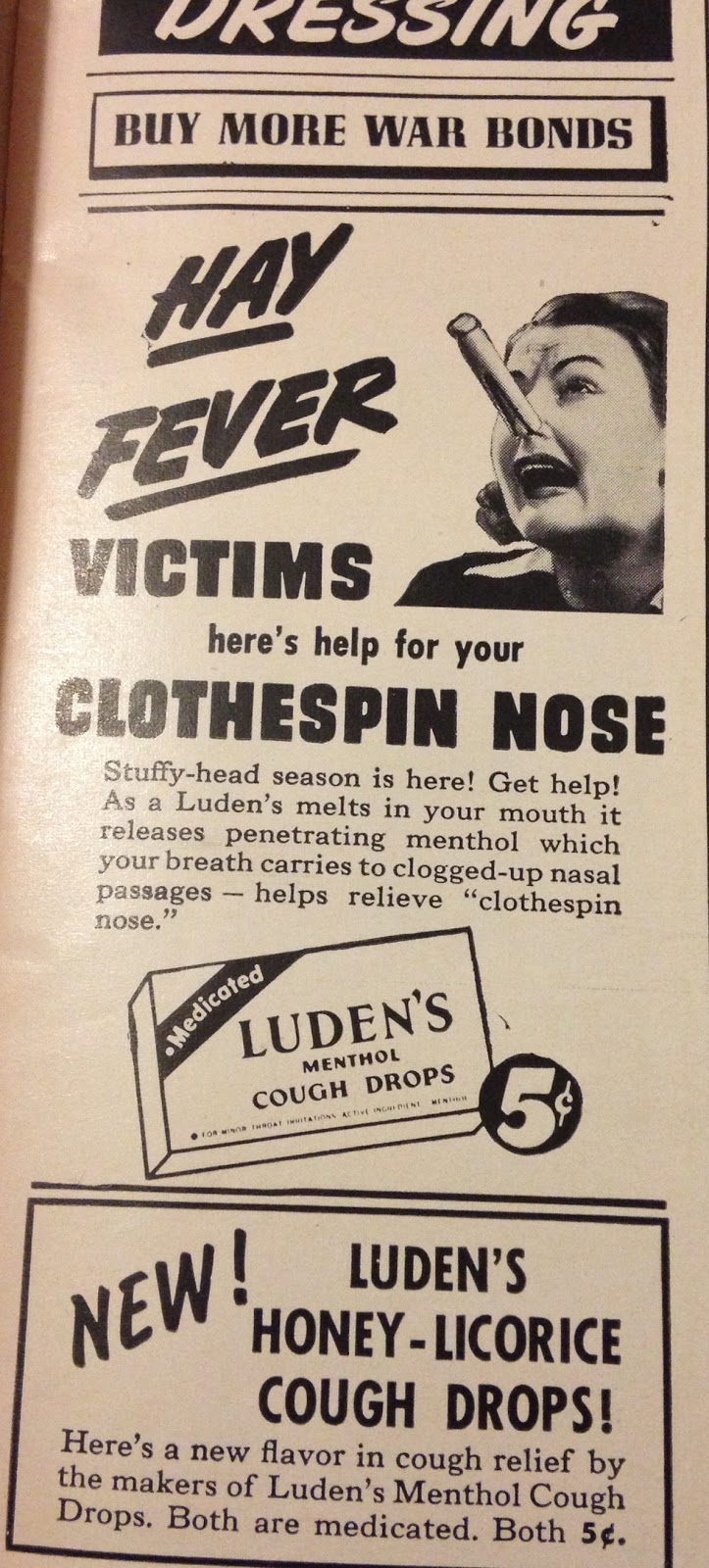
Ads for the poor "clothespin nose" hay fever sufferers like myself

And the beautiful yearnings for peacetime homes


I hope you enjoyed this little blast from the past! Life Magazine is a great source for getting a glimpse into what life was like at any given time, and I'm very happy to have found this edition.

     Thanks for reading,
         Delany