Showing posts with label second world war. Show all posts
Showing posts with label second world war. Show all posts
Wednesday, September 6, 2017
World War Wednesdays: "The Fine Accomplishments Which Have Attended its Growth": Cowal W.I. During WWII
As a historian of both local history and broader subject matter, I often find myself developing obsessions with certain topics and stories (as evidenced by this blog). One such fascination this summer has been with the community of Cowal, a formerly bustling village between Dutton-Dunwich and Southwold Townships that has been reduced to ghost town status in recent years. I find the Cowal Women's Institute's edition of the Tweedsmuir Histories to be one of the most interesting and exhaustive, and enjoy flipping through and learning about the place it once was. In so doing, I came across an account of the Institute's service during the Second World War, and thought I would share some excerpts in recognition of some outstanding local women.
"In 1939 War was declared. Many homes were affected and again every woman in the Community did War work of some kind. As well as quilting at the regular Institute meetings, the Community divided into four groups, namely Valley Group, 4th Group, 5th Group, and West Group, and quiltings were held in the homes and Red Cross sewing and knitting done." The Farmers' Club joined with the Institute to sponsor dances, auction sales etc., to raise money for overseas work."
The Knitting Report for the March Meeting 1940 read that the following articles had been completed: "92 sweaters, 43 scarves, 116 pairs of socks, 43 pairs of 18" socks, 6 pairs of 25" stockings, 35 pairs of mitts, 34 pairs of gloves, 10 washcloths, 4 aero caps, 4 pairs of women's stockings, 2 women's vests, 21 pairs of ankle socks, 15 pairs of women's knickers, 1 helmet, and 1 pneumonia jacket."
The Sewing Report from that same meeting accounted for "19 bed gowns, 16 pillow slips, 16 sling bandages, 9 pneumonia jackets, 6 abdominal binders, 5 suits of pyjamas." For May and June: "11 hospital gowns, 2 pairs of pyjamas, 8 pneumonia jackets, 4 pillow cases, and 5 bandages."
Mrs. Hugh Carroll, the writer of that section, rightly reflects that "The ladies never ceased their sewing and knitting as long as there was a need for it."
Other volunteer efforts organized by the ladies included selling tickets on quilts, afghans, hope chests, blankets, and other items; salvage drives; door-to-door canvassing; teas at quiltings; and developing "numerous ways to raise money so badly needed to provide the necessities for our boys overseas."
Mrs. Carroll writes further that "Boxes were sent regularly to our soldiers. 85 boxes were sent overseas in 1943-1944 alone. Total expense was $217.77. We were a very fortunate Community- all our boys returned. In appreciation of their sacrifice, the Institute presented each one with twenty five dollars in cash, or an equivalent gift."
In addition, "We did not forget the people of Britain who gave so much. Boxes were sent after the war for distribution. In 1940 each member was asked to give 50 cents towards furnishing a Ward in a Canadian hospital in England. In 1941 the Institute was asked to send jam to Britain. It was decided to use the surplus fruit to make jam. A committee of 3 members reported making 96 pounds of jam to be sent overseas through the Red Cross. For several years the Institute sent 100 pounds of honey to England as a food supplement to their tight rationing."
The last of the account states that "In their busy schedule the Women's Institute still found time once a month for two members to help serve the boys of the Airforce at Hostess House, Fingal Airport... In July 1944 a garden party was held at the Cowal Hall sponsored by the Women's Institute assisted by the Junior Girls and Junior Farmers to raise extra money for the Overseas Bof Fund, and these were continued later as a social event until 1952."
The incredible contributions made by these women were in not exceptional in relation to those made by Institutes across the province, and they represent just one example of local community organization in support of the war effort. What I find unique is the depth of their records and use of existing social structures to adapt and develop ways of raising funds.
Thanks for reading,
Delany


Wednesday, August 30, 2017
World War Wednesdays: In the News: The USS Indianapolis
 |
| USS Indianapolis in Pearl Harbor, Hawaii in 1937. US Navy Photo |
 |
| U.S. Naval Institute |
On July 16, 1945, the Indianapolis sailed from California with a top secret cargo to Hawaii for refuelling, then to Tinian where it unloaded its cargo, the uranium and major components of the atomic bomb to be dropped on Hiroshima by the Enola Gay on August 6. The Indianapolis was then routed to Guam that the seeds for the destruction of the Pacific had long since ceased. The Japanese surface fleet no longer existed as a threat, and 1,000 miles to the north preparations were underway for the invasion of the Japanese mainland. These conditions resulted in a relaxed state of alert on the part of those who were to route the Indianapolis across the Philippine Sea."
ussindianapolis.org includes a list of evidence as to the details of the ship's fateful final journey:
- Although naval authorities at Guam knew that on July 24, four days before the Indianapolis departed for Leyte, the destroyer escort USS Underhill had been sunk by a Japanese submarine within range of his path, McVay was not told.
- Although a code-breaking system called ULTRA had alerted naval intelligence that a Japanese submarine (the I-58 by name which ultimately sank the Indianapolis) was operating in his path, McVay was not told. (Classified as top secret until the early 1990s, this intelligence -- and the fact it was withheld from McVay before he sailed from Guam -- was not disclosed during his subsequent court-martial.)
- Although no capital ship (unequipped with antisubmarine detection devices such as the Indianapolis) had made the transit between Guam and the Philippines without a destroyer escort throughout World War II, McVay's request for such an escort was denied.
- Although the routing officer at Guam was aware of dangers in the ship's path, he said a destroyer escort for the Indianapolis was "not necessary" (and, unbelievably, testified at McVay's subsequent court-martial that the risk of submarine attack along the Indianapolis's route "was very slight").
- Although McVay was told of "submarine sightings" along his path, none had been confirmed. Such sightings were commonplace throughout the war and were generally ignored by navy commanders unless confirmed.

"Thus, the Indianapolis set sail for Leyte on July 26, 1945, sent into harm's way with its captain unaware of dangers which shore-based naval personnel knew were in his path. Captain McVay's orders were to "zigzag at his discretion." Zigzagging is a naval maneuver used to avoid torpedo attack, generally considered most effective once the torpedoes have been launched. No Navy directives in force at that time or since recommended, much less ordered, zigzagging at night in poor visibility. At about 11pm on Sunday night, July 29, the Indianapolis traveling alone was about halfway across the Philippine Sea. There was heavy cloud cover with visibility severely limited. Captain McVay gave orders to cease zigzagging and retired to his cabin. Minutes later the ship was spotted as an indistinct blur by Japanese submarine commander Mochitura Hasimoto of the I-58. It was coming directly toward him from the east. Shortly after midnight the ship was struck by two torpedoes and sank in about twelve minutes.
When the ship failed to arrive at Leyte on Tuesday morning, a series of blunders ensued. First, there was confusion as to which area the Indianapolis was to report when it arrived. Second, there was no directive to report the non-arrival of a combatant ship. And, third, there was no request to retransmit a garbled message which would have clarified the Indianapolis' arrival time. As a result, the surviving crew of the Indianapolis was left floating in shark-infested waters until 11am on Thursday, August 2, when Lt. Wilbur C. Gwinn, the pilot of a Ventura scout-bomber, lost the weight from his navigational antenna trailing behind the plane, a loss which was to save the lives of 316 men. While crawling back through the fuselage of his plane to repair the thrashing antenna, Gwinn happened to glance down at the sea and noticed a long oil slick. Back in the cockpit, Gwinn dropped down to investigate, spotted men floating in the sea, and radioed for help. At 3:30 that afternoon Lt. R. Adrian Marks, flying a PBY Catalina, was the first to arrive on the scene. Horrified at the sight of sharks attacking men below him, Marks landed his flying boat in the sea, and, pulling a survivor aboard, he was the first to learn of the Indianapolis disaster." ussindianapolis.org
Capt. William J. Toti, USN (Retired) describes the legal scandal that ensued: "The Indy controversy
erupted in August 1945, just after the atomic bombs were dropped. The American
public was outraged at the loss of more than 800 lives in the waning days of
the war, and a Navy court of inquiry was convened to investigate. Its recommendation
was that Captain McVay be court-martialed for hazarding his vessel by failure
to zigzag, but Admiral Chester Nimitz disagreed and instead issued the captain
a letter of reprimand. Admiral Ernest King later overturned Nimitz’s decision
and recommended a court-martial, which Secretary of the Navy Forrestal later
convened.
In doing so, King intervened directly
with the Secretary of the Navy to move forward with the court-martial in
parallel with an investigation by the Inspector General (IG). But a
court-martial is a trial, not an investigatory tool. If King’s problem was simply
a lack of information, why didn’t he allow the Inspector General to issue his
report before ordering the court-martial? Some believe it is because King was
not satisfied that the IG’s conclusions would support his decision to
court-martial.
The Navy Judge Advocate General also was
asked to review the referral. His response contained the curious statement that
the charges included in the initial referral were “the only ones that can be
supported,” as if an agenda was at work to establish a greater foundation for
prosecution. Whatever the truth, this statement certainly creates the
perception that the Judge Advocate General was under direction to discover more
charges to refer against McVay.
In the end, McVay was charged with two
counts: suffering his vessel to be hazarded by failing to zigzag, and failure
to order abandon ship in a timely manner. His counsel, reportedly hand-picked
by King, had never argued a case in court before. The court claimed that McVay was not
being charged for any deficiency that led to the sinking of his ship. They made
a strong case that the “Indianapolis was hazarded before she was ever detected
by I-58, and would have been hazarded if she had never been detected by I-58.”
In essence, McVay could have been found guilty in a court– martial even if his
ship had not been sunk. This is a meaningless legal distinction, however, since
absent the sinking, there would have been no way for anyone to know that the
vessel had been hazarded.
Hence, despite the fact that McVay was
convicted only on the first count—for suffering his vessel to be hazarded by
not zigzagging—there is no way to escape the fact that Captain McVay was
court-martialed for having his ship sunk. Put all these facts together, and it
is understandable why most of the survivors believe that Admiral King was doing
all he could to tilt the scales of justice against McVay. Even Admiral Nimitz
later would say to one survivor that the entire affair involving the
court-martial was a mistake and should never have happened."

From a statement submitted at a September 1999 Senate hearing by Paul J. Murphy, USS Indianapolis survivor: "The charge upon which he was convicted for failing to zigzag contained a phrase 'in good visibility.' The visibility that night was NOT good as all of us know who were there that night."
Like Murphy, many of Indianapolis's survivors said that McVay was not to blame for the sinking, the families of some of the men who died thought otherwise. One piece of mail read: "Merry Christmas! Our family's holiday would be a lot merrier if you hadn't killed my son." The guilt that was placed on McVay's shoulders mounted until he committed suicide in 1968, using his Navy-issued revolver. He was discovered on his front lawn with a toy sailor in one hand. He was 70 years old.
In 1996, sixth-grade student Hunter Scott began his research on the sinking of the Indianapolis, which led to a United States Congressional investigation. In October 2000, the United States Congress passed a resolution that Captain McVay's record should state that "he is exonerated for the loss of Indianapolis", which was signed by President Bill Clinton. The resolution noted that, although several ships of the U.S. Navy were lost in combat in World War II, McVay was the only captain to be court-martialed for the sinking of this ship.
In July 2001, the United States Secretary of the Navy ordered McVay's official Navy record cleared of all wrongdoing.
In July 2016, new details about the sinking emerged which helped lead to the wreck's discovery this month. Read about those details here: http://www.cnn.com/2016/07/29/us/uss-indianapolis-sinking-anniversary/index.html and the discovery here: http://www.bbc.com/news/uk-41041013
Credits to ussindianapolis.org and the U.S. Naval Institute for the information in this post.
Thanks for reading,
Delany (@DLeitchHistory on Twitter)
Wednesday, August 23, 2017
World War Wednesdays: Dieppe 75th Anniversary
 |
| A German photograph of the aftermath of the Dieppe raid, Royal Canadian Air Force |
http://www.veterans.gc.ca/eng/remembrance/history/second-world-war/1942-dieppe-raid
Followed by oral testimonies of veterans who served there: https://www.youtube.com/watch?v=otYbcd9sFrQ
In the case of Dieppe, it is important to understand the soldiers' perspectives and truly account for their horrific experiences. This event, more than any other, demonstrates the futility of warfare and the vast distinction between those who send the orders and those who must act upon them.
As with most anniversaries, I like to tie in a local connection, and found an interesting one with the story of Lieut.-Col. John Andrews. It is told through a series of articles in the St. Thomas Times-Journal over around 20 years and demonstrates how people on the home front were informed of the fate of their local soldiers.
St. Thomas Times-Journal, Jan. 16, 1942
PROMOTED LT.-COLONELThe promotion of Major John Andrews, son of Col. and Mrs. W. A. Andrews, 33 Roseberry Place, to the rank of Lieutenant-Colonel about the first of December last has been learned of here. At the age of 32, he is one of the youngest men of that rank in the Canadian Army, either in Canada or overseas, there being only two younger so far as is known. Lt.-Col. Andrews is now in command of the Calgary Tank Battalion with the Canadian Corps overseas, succeeding Lt.-Col. Bradbrook, of Calgary, who recruited the battalion and took it overseas, and who has since been posted to other duties with the Middle East Command. The battalion is part of the Canadian Corps troops and is understood to have the newest of British tank equipment. Lt.-Col. Andrews has been overseas since about the middle of last year, having preceded to England as brigade major of the tank regiments which left Canada at that time. He had previously been stationed at Camp Borden as a tank expert, his special training having been with tanks and other armored fighting machines for several years prior to outbreak of the war. He had taken senior officers' tank courses in England before the war and was thoroughly grounded in all their features and uses.
St. Thomas Times-Journal, August 1942
Lieut.-Col. John Andrews, son of Lieut.-Col. and Mrs. W. A. Andrews, 33 Roseberry Place, who is reported missing from the Dieppe raid last Wednesday. He was in command of the Calgary Tank Battalion, and was one of the youngest men in the Canadian Army to hold the rank of lieutenant-colonel. He was 33 years old, a native of St. Thomas. By a coincidence, his paternal grandfather, Foster Andrews, a pioneer resident of St. Thomas, observed his 91st birthday, Friday, the day that word came that Lt.-Col. Andrews was missing. The message was received by Mrs. Andrews of Barrie, Ontario who was on vacation in the northern part of the province with her two-year-old daughter. Mrs. Andrews is a Winnipeg young woman. She communicated with her husband's parents in this city Friday night. Although official details have not been received, Lieut.-Col. Andrews is believed to have per-" (article not continued)
St. Thomas Times-Journal, September 1942
LIST BARRIE OFFICER MISSING AFTER RAID
Fear Was on Boat Hit by Shell at Dieppe
Barrie, Sept. 16
Lieut.-Col. John Gilby Andrews, 33, officer commanding 14th Army Tank Battalion (Calgary regiment)is reported missing in the official Dieppe casualty list. His wife, Mrs. Eleanor Catherine Andrews, Clapperton St., Barrie, has been informed the young officer was last seen leaving his tank with his crew for a launch, and that the launch was hit directly. Col. Andrews was one of the "originals" of the Canadian Armored Corps at Camp Borden, who established the Canadian Armored Fighting Vehicles school there, May 1, 1938. Mrs. Andrews and their two-year-old daughter Susan reside at Barrie; his parents and a sister, Geraldine, live in St. Thomas, and another sister, Jean, wife of Lieut. Pat McGiverin, Royal Regiment of Canada, in Toronto.
St. Thomas Times-Journal, Oct. 4, 1958
Col. Andrews to Attend Unveiling at Brookwood
When Queen Elizabeth on Oct. 25 unveils the Brookwood Memorial in England, which commemorates 3,500 men and women of Commonwealth land forces who died at sea, on raids and in other missions and actions during World War II, and who have no known graves, among the many Canadians watching will be Lt.-Col. Warren A. Andrews, St. Thomas Civic Defense co-ordinator. The Brookwood Memorial, standing in the Brookwood cemetery near Woking, Surrey, contains the names of 148 Canadians- among them the name of Lt.-Col. John Gilby Andrews, the son of Col. and Mrs. Andrews was a 33 year-old officer commanding the 14th Armored Battalion (Calgary Tanks), when he was killed at Dieppe. An "original" of the Canadian Armored Corps at Camp Borden, he helped establish the Canadian Armored Fighting Vehicles School there in 1938. Col. Andrews will sail from Montreal to England on Oct. 14. Arriving Oct. 20, he will visit his granddaughter, Miss Susan Wallace, who lives in Southport. Together, they will attend the unveiling ceremony of the Brookwood Memorial.
St. Thomas Times-Journal May 6, 1961
New Hangar at Meaford Range Named for Col. Jack Andrews
Military personnel of the Meaford Armored Fighting Vehicle Range will be hosts in a dedication ceremony on Sunday, May 14, to commemorate the name of Lt.-Col. J. G. Andrews, who commanded the Calgary Regiment at Dieppe and who died in that action. The name, "Andrews Hangar" is being given to a new tank hangar which was built at the Range. This occasion affords the Royal Canadian Armored Corps an opportunity to record its appreciation for the services rendered by one of its original officers. Lt.-Col. Andrews was born in 1902 in St. Thomas, the son of Lt.-Col. W. A. Andrews and Mrs. Andrews, Roseberry Place, and attended school at St. Thomas Collegiate Institute. After graduation, he was employed in a local bank and soon became interested in the Militia and was appointed as a provisional lieutenant in the Elgin Regiment in 1928. This was his father's regiment. In 1930 he decided to make the Army his career and was attached to the Royal Canadian Regiment in August of that year. After completing a course at Royal Military College, Kingston, he was posted to the Princess Patricia's Canadian Light Infantry.
IN AT THE START
In 1936, a Canadian Tank School was established at London, Ont. This school was commanded by Major F. F. Worthington, MC and bar (afterwards Major-General F. F. Worthington, CB, MC, MM, CD). Lt. Andrews was selected for posting to this school as an instructor. In 1938 the school moved to Camp Borden and was redesignated the Canadian Armored Fighting Vehicle School. Lt. Andrews was promoted to captain at this time and transferred to the AFV School, still as a member of the PPCLI. During the next year he held posts at National Defense Headquarters and the Directorate of Military Training in Ottawa and later was brigade-major at headquarters, Army Tank Brigade. In June 1941 he went overseas in that capacity, and thus ended his five years as a technical officer and instructor in the use of tanks. Major Andrews has been in on the birth of what is now the Royal Canadian Armored Corps. On December 3, 1941, Major Andrews was promoted to the rank of lieutenant-colonel and appointed to command the 14th Army Tank Battalion (Calgary Regiment). This was the first unit of the Canadian Armored Corps to go into action. The Dieppe Story is well known and the loss of Lt. Col. Andrews was one of the many tragedies of the day. Lt.-Col. Andrews was married in 1937 in Winnipeg to Eleanor Catherine Allan. They had one daughter, Susan, born in Barrie, who will unveil the memorial plaque on the "Andrews Hangar." His wife has since remarried, and is now Mrs. Ben Wallace, of Toronto.
ATTENDING FROM HERE
The ceremony next Sunday will be attended by Col. Andrews's father and mother, who will accompany their daughter, Mrs. T. Patrick McGiverin and Mr. McGiverin; Lt.-Col. F. H. Medcalf, honorary lieutenant-colonel of the Elgin Regiment, and Mrs. Medcalf; Lt.-Col. J. W. McNeil; and Mr. and Mrs. Hugh Agnew.
The Doc Alexander Blog describes the circumstances of Lt.-Col. Andrews's death:
"Andrews, Lt.-Col. John Gilby- The 33-year-old commanding officer of the CATR was Killed in Action on Aug. 19, 1942 during the Dieppe Raid. Andrews, who was commanding 'Regiment,' a Churchill MkII, attempted to land his tank on White Beach. But unknown to him, it appears that the waterproof cover had ripped as Regiment left Tank Landing Craft No. 8. The tank sank into roughly six feet of water and the engine flooded and died. Doc Alexander reports in his Dieppe journal that a few of the men climbed out of Regiment and were picked up by a small L-boat. Doc Alexander wrote: 'Some of the men escaped from the turret and I saw them picked up by a small L-Boat which immediately put out to sea, but only traveled a short distance when it received a direct hit from one of the shore batteries and burst into flames. I saw the men again jump into the water, but we do not know whether they were again picked up or not." Andrews was initially reported missing following the Dieppe Raid, but it was later confirmed that he had indeed been killed."
Finally, check out this collection of artifacts from Dieppe, including Lt.-Col. Andrews's Memorial Cross: https://www.thestar.com/news/insight/2017/08/18/shackles-pebbles-and-posters-the-raid-on-dieppe-in-10.html
Thanks for reaching the end of this little Dieppe conglomeration; I hope that it enriched your reflections on that tremendous event.
Thanks for reading,
Delany (@DLeitchHistory on Twitter)
Wednesday, August 9, 2017
World War Wednesdays: Dunkirk in Memory and Onscreen
 |
| Troops wait in line for their turn to be rescued from the beach of Dunkirk |

One of the most widely-shared ones concerns the story of real-life Dunkirk hero James Campbell Clouston, a Canadian who grew up in Montreal and attended McGill University. Credited with saving close to 200,000 soldiers as German planes bombed the pier, he calmly ushered troops onto ships for five straight days. University of Ottawa professor Serge Durflinger reflects: "He's one of those great unsung Canadians who, in a pivotal moment in time, does extraordinary things, dies, and then goes completely forgotten."
After the release of the film this year, Clouston's son protested its lack of recognition of his father, saying that Kenneth Branagh's character should have had a Canadian accent and that his father warranted at least a mention in the credits. His efforts are being joined by other fellow Canadians who are lobbying Canada Post to issue a commemorative stamp, and for official government recognition of Clouston's role in the evacuation. War historian Jeffrey Street is also working on a book about Clouston.
 |
| Ottawa resident Michael Zavacky has designed this image as a proposed stamp commemorating Clouston. |
Serge Durflinger elaborates: "Like clockwork, he would have 500 guys aboard in 45 minutes, and the vessel would take off. He had six to seven vessels lined up doing this all at the same time."

"After five straight days on the pier, Clouston went to England for a planning meeting. He could have stayed, but chose to return because close to 100,000 troops remained, and Clouston spoke French because of his Montreal upbringing. His 15-person motor launch was bombed on the way back, and he opted to stay with his crew instead of taking an early offer to be saved. He died along with 12 other crewmen of hypothermia, telling 'white lies' to the end to keep up spirits, one survivor recounted. He left a wife and two infant sons."
 |
| CTV News Montreal |
According to the article, "Renee and Annie say they had been living with their parents in Antwerp, Belgium in the spring of 1940 when German forces invaded. Renee was 21 at the time; Annie was 17. Within days, the family decided to flee to Paris, but became trapped just across the French-Belgian in a town they'd never heard of before: Dunkirk. They spent the night in a small hotel, where Renee and Annie remember being so tired from the journey, they didn't hear a thing when German planes began bombarding the town. 'We woke up the next day and there was no roof on the hotel,' Renee told CTV Montreal. As the fighting between the Allies and German forces intensified, the locals of the town directed Renee and Annie's family to the beach where they had heard that French, English, and Belgian soldiers were being evacuated on ships that might be able to take along some civilians too.
But, by the time the family reached the beach, the ships were already steaming away for England. As the family stood on the beach, watching the ships leave, they found themselves in serious danger. German forces were still raining bombs and bullets down onto the beach, and Renee and Annie and their parents were trapped in a 'No Man's Land.' They took cover on the sand dunes, as bullets flew over their heads. 'You think about yourself, not others. It's not nice, but you think at the moment, 'How can I survive?' Annie said. The four eventually escaped the fighting and the beach with the help of two British soldiers who came to the aid of the exhausted family. When the battle ended, Germany had seized control of France. So the family decided they had nowhere to go but back to Antwerp, Belgium. The journey had to be made on foot and took a full three weeks. The family managed to survive the rest of the war, thanks in large part to the French resistance. The sisters moved on with their lives and had families of their own. But they say the release of the film brought back memories of what they'd seen on the beach in those days."
Finally, to give your eyes a break, I highly recommend checking out this interview with Dunkirk veteran Ken Sturdy, who saw the film recently: http://globalnews.ca/tag/ken-sturdy/
Content credits to National Post, CTV News Montreal, and Global News. If you haven't seen the film yet, please do, and let's keep the conversation going!
Thanks for reading,
Delany (@DLeitchHistory on Twitter)
Wednesday, August 2, 2017
World War Wednesdays: Female Flyers of Nazi Germany
 |
| Hanna Reitsch's Indoor Flight, www.ww2gravesite.com |
Hanna Reitsch

Melitta Gräfin von Schenk von Stauffenberg

Born on January 9, 1903 in Krotoschin (then Prussia, now Poland), her father, Michael Schiller, was the son of a Jewish fur-trading family who had converted to Protestantism at a young age.
To begin, Mulley introduces the subjects of her work as being women who had both learned to fly in Silesia (then Germany). Both were trained in gliders, which became a popular sport and symbol of regeneration and freedom after commercial flight was banned in Germany following the First World War. The atmosphere of patriotism and pride surrounding gliding in the postwar years attracted both Hanna and Melitta, who were naturally talented in the cockpit. Mulley says that while women were not encouraged to fly at that time, it "was a very glamorous time for flight," and these women became associated with that image.
Mulley then offers a brief description of Hanna Reitsch's life and career. She reflects that Hanna was the first woman to fly a helicopter and the first person to fly a helicopter inside a building (see above). As the Nazi party came to power in 1933 and restored the German air force, she was proud of her blond hair and blue eyes and "delighted to be associated with the Nazi regime." She regarded the party as being capable of restoring pride, commerce, and jobs in Germany, and eventually began undertaking a great deal of public relations work on its behalf in large part due to her flying. During the war, she became a test pilot and would fly planes with special fittings on their wings that would cut steel cables on the zeppelin balloons that were barricading London. This meant that she was required to deliberately fly into the balloon cables at great risk. She also became the first of very few women to pilot a Messerschmidt 163 (a jet rocket plane) and survived a horrible crash, later becoming an early pioneer of plastic surgery. In recognition of her contributions to the Nazi regime, she was awarded the prestigious Iron Cross 1st and 2nd Class.
In contrast, Mulley describes Melitta Gräfin von Schenk von Stauffenberg as being much less bubbly and confident than Hanna. Dark-haired and shy, she adored flying and physics and was a university graduate in aeronautical engineering. Given her expertise, she developed pioneering advancements for the Luftwaffe and tested her own devices. Specializing in dive bombing, she worked on Stukkas and Junkers JU 87/88s, which necessitated steep dives at high speeds. She also was involved in highly dangerous targeted pinpoint bombing without the pressurized suits with which the Allies were providing their test pilots, meaning she faced a high danger of blacking out. In total, she undertook an unbelievably impressive 15,000 dive bombs, and also headed one of the most significant technological research centers for the Nazi regime.

Mulley explains that The Women Who Flew for Hitler is formatted as a double biography because of the vast differences between the two women but their shared commonality in the theme of proud German patriotism and sense of duty. She describes Melitta as being a conservative from an old German family, who was deeply committed to the pre-Nazi Germany, while Hanna was more committed to the new Nazi regime. Together, their stories provide "a much greater insight into the insanity of the Nazi regime" according to Mulley, which she argues is evidenced by its claim that there was no place for Jews in Germany, and that women were expected to assume a traditional domestic role; but both Hanna and Melitta were celebrated for flying and Melitta's Jewish background was ignored. Indeed, the Nazis were well aware of Melitta's Jewish heritage, since she had applied for Equal to Aryan status for herself and her whole family while she worked on making herself indispensable enough to spare them all. This evidences the contradictory Nazi policies and a willingness to compromise for which they are not often known, and demonstrates that there was no uniformity in the regime's belief system.
 |
| Glider of the Berlin Segelflugverein at the Rhönwettbewerb 1923, Deutsches Museum |
Similarly, Hanna also enjoyed the dramatics and notoriety associated with the regime. She quickly became a celebrity, and is often seen in footage from Nazi leaders' birthdays and special events where the camera zooms in to acknowledge her. During the 1938 Motor Show, an international fair hosted by Germany, numerous leading celebrities and Grand Prix winners were featured in order to showcase Germany's return to power on the world stage. The event included a helicopter display in the Deutschlandhalle, which was the biggest stadium in Europe at the time, where Hanna flew the craft inside while giving the Nazi salute. Melitta was often asked to do similar appearances but regularly found excuses not to, and once gave a speech in Stockholm during the war that never once mentioned Hitler or the regime and only referred ambiguously to her country. In regards to Hanna, Mulley notes an implicit propaganda of glamorous female empowerment which was used to suggest dedication to the regime and not for recruitment. She was a patriotic figure to rally behind, and was even taken to meet people on the Eastern Front during the last days of the war to boost morale.
 |
| Adolf Hitler awards Hanna Reitsch the Iron Cross 2nd Class in March 1941 |
Mulley's own interpretation of Hanna and Melitta is that Hanna can be seen as an early protofeminist, while Melitta was more of an exception to a rule. Hanna was willing to look the other way regarding Nazi actions and policies, but Melitta was critical of the regime from the start. In that regard, Mulley observes two women who worked very closely in a small sphere, but their mindsets and decisions led to their two very different paths. After the war, Hanna claimed herself to be apolitical, but Mulley argues that as a woman she was actually much more political because she made the active choice to be involved and support the regime. In truth, she was deeply anti-Semitic her whole life and supported the Nazis to the end.
If you're interested in more biographical information on Hanna and Melitta, I encourage you to read more. Some of the most significant aspects of their lives are not included in the scope of Mulley's work, but can be easily uncovered online.
Thanks for reading,
Delany (@DLeitchHistory on Twitter)
Wednesday, June 7, 2017
World War Wednesdays: "Today not Tomorrow:" The First Hussars on D-Day
 |
| Tank and Plaque commemorating the First Hussars on Juno Beach, Tillsonburg Military History Club |
I don't want to get too much into a history of the First Hussars Regiment because I hope to do a full-length one in the future, but I'll just begin by saying that it was based in London and was formed from a highly decorated Cavalry militia troop dating back to 1835.

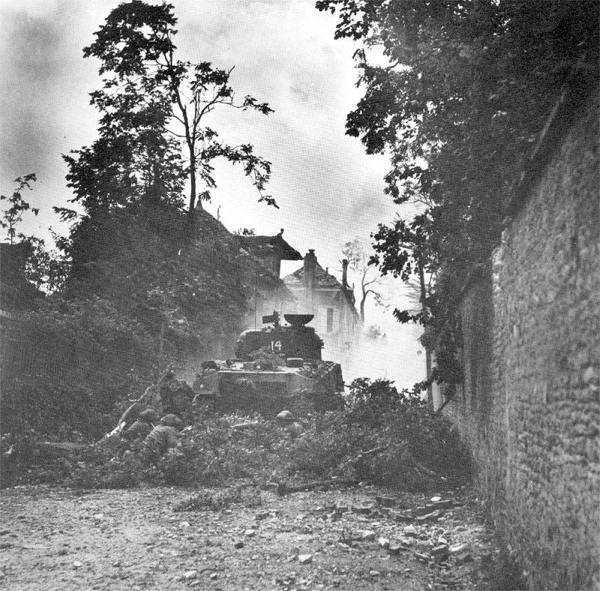
"The 1st Hussars Regiment was from London, Ontario. The 1st Hussars were equipped with DD (Duplex Drive) tanks. The tankers of the Hussars supported the Regina Rifles at Courseulles, the Winnipeg Rifles at Graye-sur-Mer and the Canadian Scottish on the right.
'B' squadron supporting the Reginas, landed at Courseulles at 0755 hours with 14 out of the 19 tanks remaining. The DD tanks engaged the German guns from a distance of 200 yards. An 88mm beside the harbour exit and a 50 mm behind it fired continuously until their protective shields were pierced by shells. A 75 mm on the right flank fired 200 rounds before it was knocked out. No tanks were lost in the spirited duel. When the Regina Rifles landed, they fought their way into Courseulles, and once beyond the town the tank squadrons reunited with their affiliated infantry battalions and worked their way inland against machine-gun nests and entrenched infantry.
 Seven 'A' squadron tanks landed a few minutes after the Winnipeg Rifles, on the beach west of Courseulles where the German defences included three blockhouses and more than thirteen concrete gun emplacements. The tanks fired on the 50 mm anti-tank gun emplacements. Five more tanks were landed by a LCT that earlier had had problems with its ramp. As soon as the anti-tank guns on the beach had been destroyed, the DD tanks began to cruise up and down the beach engaging the machine gun nests permitting the infantry to sweep over the dunes to begin their push inland. There were delays in creating beach exits, but the engineers were able to clear a path and complete a causeway at 0920 hours and 'A' squadron began to move toward their first objective, Graye-sur-Mer.
The regimental history gives the following description: "D-Day Operation Overlord. At 0730 hours 6th June, 1944, the 6th Canadian Armoured Regiment (1st Hussars) in support of the 7th Canadian Infantry Brigade of the 3rd Canadian Division assaulted and overpowered the Hun's beach defences between Courseulles-sur-Mer and Bernières-sur-Mer and after wiping out enemy resistance moved inland…. During the rest of day the Shermans scurried here and there as the Winnipeg Rifles pressed inland and gave fire support to neutralize enemy positions. Whenever the 'Pegs' were pinned down the tanks played a role in helping the infantry to clear each successive town as the advance moved on."
 'B' squadron, reduced to half-strength and numbering only nine tanks, was severely hit when hurrying to the aid of infantry attacking Pierrepont. Five tanks were lost to fire from a well handled 88mm gun. Sgt Leo Gariepy: "I saw Lieutenant McLeod's tank burst high in flame. The troop corporal's tank suffered the same fate, and I saw several other tanks knocked out." Gariepy saw the muzzle on an 88mm gun rising from a hidden emplacement 30 yards ahead, the barrel pointing directly at him. "I gave rapid evasive orders to my driver and told my gunner to blast him. He fired two rounds; the second scoring a direct hit. I moved up to the gun emplacement and shot all the crew of 14 cowering in the trench."
 After helping the Winnipeg Rifles through Creully, one troop of 'C' Squadron commanded by Lt. W.F. McCormick pushed on towards the objective and made it all the way to the north edge of Secqueville-en-Bessin without encountering any opposition. The troop had probably got closer to the final objective than any other element of the Allies' seaborne assault forces, but finding themselves isolated without infantry or anti-tank support they retraced their steps and rejoined the regiment.
The regimental history: "In view of the losses in DD tanks due to the unsuitable weather, the First Hussars ended D-Day with a considerably smaller number of tanks than was desirable for their first night in Europe. In addition, the infantry continually had to anticipate Jerry counter-attacking heavily with armour in an attempt to kick them back on the beaches. However, the eventual appearance of the tanks with their capability of needling out the MG posts raised the morale of the infantry, so that by nightfall Harry Foster's 7th Brigade was firmly astride the line running through Fontaine-Henri, Pierrepont and St. Gabriel."
After dark the First Hussars tanks rallied in a harbour on high ground south-west of Pierrepont." (www.junobeach.info/juno4-8.htm)
 |
| Elgin County Archives |
Ultimately, tanks of the First Hussars were the only ones to reach their D-Day objectives during that fateful operation (Phil Egan, The Sarnia Journal, Nov. 10, 2016). Following their Normandy landing, they went on to take part in the brutal fighting in the bridgehead, the closing of the Falaise Gap, and the clearing of the cross channel guns at Calais. "They fought with distinction through Belgium and Holland and ended the war in Germany. During this period, the First Hussars won 72 Decorations, Certificates, or Mentioned in Dispatches, more than any other unit in the 1st Canadian Army, and were awarded 20 Battle Honours for outstanding Bravery." (1st Hussars Cavalry Fund)
 |
| First Hussars D-Day veterans William Reed, left, Aris Domnas, Arthur Boyle and Philip Cockburn were among more than 200 people who attended the annual D-Day reunion ceremony at Victoria Park Sunday, June 1, 2014. (DEREK RUTTAN/ The London Free Press) |
Nearer to the moment than most of the 200 people in the crowd as part of a D-Day remembrance reunion, Reed had been in that same tank as a 21-year-old gunner when his crew landed on Juno Beach.
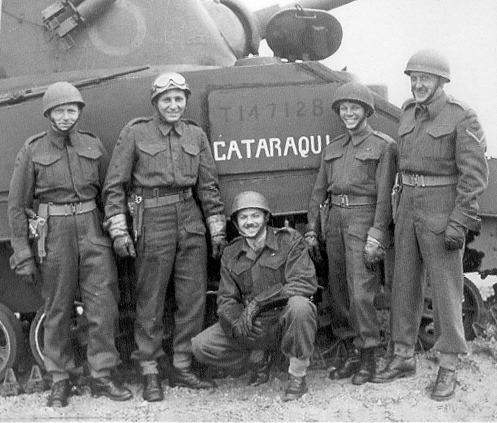
They were Reed, Frank White, Frank Fowler (who came up the name “Holy Roller”), Terry Doherty and Everett Smith — five men among thousands of Allied forces to take part in a turning-point battle of the war.
“I was almost in tears last night,” reliving those days and his comrades, said the 91-year-old who made the trip to London from his home in Fort Erie.
He was one of four D-Day veterans to attend Sunday’s remembrance event in London’s Victoria Park.
There, the Holy Roller, a permanently mounted Sherman tank, stands tribute to the Canadian war effort and to the 700 men of the First Hussars regiment.
The tank is believed to be the only one that made it all the way from D-Day through France, Belgium and Holland into Germany.
Reed served during every year of the war. But he laughs off notions that he was a war hero.
“My biggest achievement was staying alive,” he said. “I did what my dad said: ‘Don’t volunteer for anything and keep your head down.’ ”
Derek Ruttan, The London Free Press, Sunday, June 1, 2014
In addition to the "Holy Roller" in London, "Calamity," another First Hussars tank, is on permanent display outside the Sarnia Legion (Royal Canadian Legion Branch 62), and "Bold" remains stationed in Normandy (seen in title). These powerful machines, now silenced, stand as moving tributes to the men who served on them that fateful day in June 1944 and throughout the Second World War. May we never forget for a second how lucky we are that they did.
Thanks for reading,
Delany (@DLeitchHistory on Twitter)
Wednesday, May 3, 2017
World War Wednesdays: The Canadian Club of London During Wartime

Yes, you read correctly, WWW is still up and running! My apologies for the missing post last week. I'm thrilled to be able to say that after a bit of a stressful month, I've wrapped up my undergraduate degree at the University of Ottawa and am looking forward to grad school at Western in the fall. Just before I came back home to Elgin County, I had the pleasure of attending a luncheon with the Canadian Club of Ottawa in the Chateau Laurier ballroom as a representative of the University and the Daughters of the Vote program. By coincidence, I was researching some potential topics for this week and came across some resources for Canadian Clubs closer to home and their wartime transformations. I find the Club very interesting and am always looking for local connections, and I hope you will enjoy both of those elements.
To begin, here's a description of the club from the London edition's website:
The Canadian Club of London has a long and distinguished history of uninterrupted service in the community since its founding July 31, 1906. During the past 110 years, the club has been host to more than 1000 Canadian and international leaders who have shared their views with enthusiastic London audiences, making the Canadian Club one of the longest-standing organizations in the city. Each month, from September to June, the club brings prominent Canadians to the city to speak on topical issues of national and international interest in the arts, history, business, finance, education, law and politics.
Meetings are generally held over lunch and are hosted at the Double Tree by Hilton. Members and guests take delight in spirited engagement with speakers and intelligent discussion. Our events provide outstanding opportunities for networking and engaging with prominent members of the business community in London.
Club membership is open to anyone. Members receive a monthly newsletter giving advanced details of upcoming speakers along with discounted rates on event tickets.
According to Elgin County Archives, St. Thomas also had a Canadian Club at one time, which featured patriotic programming during the First World War, but I was unable to locate those records in the database. The Elgin County Museum has the Club's minutebook, and its description in the inventory holdings reads that it "raised funds to sponsor the war effort and sponsored lectures on war topics." The entry also mentions that the Club was founded with the purpose of fostering patriotism for the war, so perhaps St. Thomas established its own model of the London version for that specific purpose. This is one of the unfortunate parts of being a historian with questions that aren't always easily answered! Sometimes we just have to go where the material is so we're headed to the big city to look at how the London Club's meetings were affected by both World Wars.
In the "Our History" section of the Canadian Club of London's website, it appears as though the club did not hold meetings between 1914 and 1918, during the First World War, or there are no records for that period. 1913 saw a "joint meeting with the Women’s Canadian Club" with "Col. Charles R. McCullogh of Hamilton, the acknowledged founder of the Canadian Club movement as the speaker." In May 1919, the speaker was Dr. William Roche, one of Western’s first two graduates and the newly appointed Chancellor for the university.
During the Second World War, however, the meetings closely reflected the geopolitical conditions at the time. "There were regular speakers from the military as well as representatives of Poland and other countries overrun by Germany and Russia expressing hope their countries would be re-established after the war. A speaker from China in 1942 said his country could win over the Japanese as long as the allies didn’t introduce some kind of “Munich” agreement that would create a withdrawal of support."
What is significant about this club is that it brings together a city's leading citizens to discuss important issues and ideas of the day. With such a long history, it is fascinating to see how the speakers and their topics change over time and gain an idea of what the popular opinions were. When the wartime context becomes a factor, those gatherings become even more significant and their messages reflect important concerns and ideas. What historians can take away from such sources as meeting minutes and summaries from clubs like this is what types of speakers and themes were being included in the programming in order to understand what the popular opinions of upper class urban residents would have been at the time.
Information comes from Elgin County Archives and the Canadian Club of London website. Stay tuned in the next few weeks for some exciting local history posts, it's that time of year when I come home and things get local!
Thanks for reading,
Delany (@DLeitchHistory on Twitter)
Thanks for reading,
Delany (@DLeitchHistory on Twitter)
Wednesday, April 12, 2017
World War Wednesdays: The Warsaw Zoo: Story Behind the Film

Welcome back, history buffs! Now that I'm in the middle of my last undergraduate exam season, I can't help but think of all the things I'd rather be doing than writing an endless pile of papers. Right near the top of the list is going to the movies, because there is what looks to be a fantastic film in theaters that portrays an amazing true story about the Holocaust. The Zookeeper's Wife draws from the unpublished diary of Antonina Zabinska, and recounts the true story of she and her husband Jan's incredible act of bravery as part of the Polish resistance.
 |
| Jan Zabinski, Yad Vashem |
The Warsaw Zoo under acclaimed director Jan Zabinski was one of Europe's largest zoos during the 1930s, and its expanded area was home to many animals including Tuzinka the elephant, its star attraction. When the Second World War broke out in 1939, vast sections of the zoo were destroyed in the bombings, many animals were killed, and others (including Tuzinka) were taken to Germany. Despite these horrors, Zabinski was aware of the immense human suffering on behalf Warsaw's Jews at the hands of the German occupiers. When the Warsaw Ghetto was established, he and his wife Antonina took it upon themselves to help their Jewish neighbors.
 |
| Antonina Zabinski, Yad Vashem |
As an employee of the Warsaw municipality, Jan was allowed to enter the ghetto, and under the pretext of supervising the trees and small public garden on the other side of the walls, would regularly visit and assist its inhabitants. As the situation in the ghetto rapidly deteriorated, Zabinski took his aid one step further by offering shelter to the Warsaw Jews, taking them over to the Aryan side, providing them with essential lifesaving documents, finding them accommodations, and, when necessary, sheltering them on the zoo's grounds and at his personal home. Regina Koenigstein describes the Zabinski villa as a modern Noah's Ark, and according to many testimonies numerous Jews found temporary shelter in the zoo's abandoned animal cells.
The Zabinkkis' dangerous undertaking was not limited to the physical assistance of Warsaw Jews. Rachel Auerbach, who participated in attempts to establish a ghetto archive of sorts which documented the story of life behind the walls in Warsaw, was in touch with Zabinski throughout that period. She went into hiding after the ghetto liquidation and continued recording events in her diary, but as the front came closer to Warsaw, she gave one of her notebooks to Zabinski. He put it into a glass jar and buried it at the zoo, and in April 1945 she was able to retrieve her manuscript and publish it.
Jan Zabinski also participated in the Polish uprising in Warsaw of August and September 1944 as a member of the Polish underground Home Army. He was taken as a prisoner to German upon its suppression, but Antonina was able to continue his work and attended to the needs of Jews left behind in the city's ruins. In his own testimony in explanation of his motives, Zabinski later reflected:
“I do not belong to any party, and no party program was my guide during the occupation... I am a Pole – a democrat. My deeds were and are a consequence of a certain psychological composition, a result of progressive-humanistic upbringing, which I received at home as well as in Kreczmar High School. Many times I wished to analyze the causes for dislike for Jews and I could not find any, besides artificially formed ones.”
Jan and Antonina Zabinski were recognized by Yad Vashem as Righteous Among the Nations on September 21, 1965. All information is courtesy of Yad Vashem, and some incredible primary resources can be accessed here: http://www.yadvashem.org/righteous/stories/zabinski
Please let me know if you've seen the film, I'd love to hear more about it and look forward to seeing it myself!
Thanks for reading,
Delany (DLeitchHistory on Twitter)
Subscribe to:
Posts (Atom)